
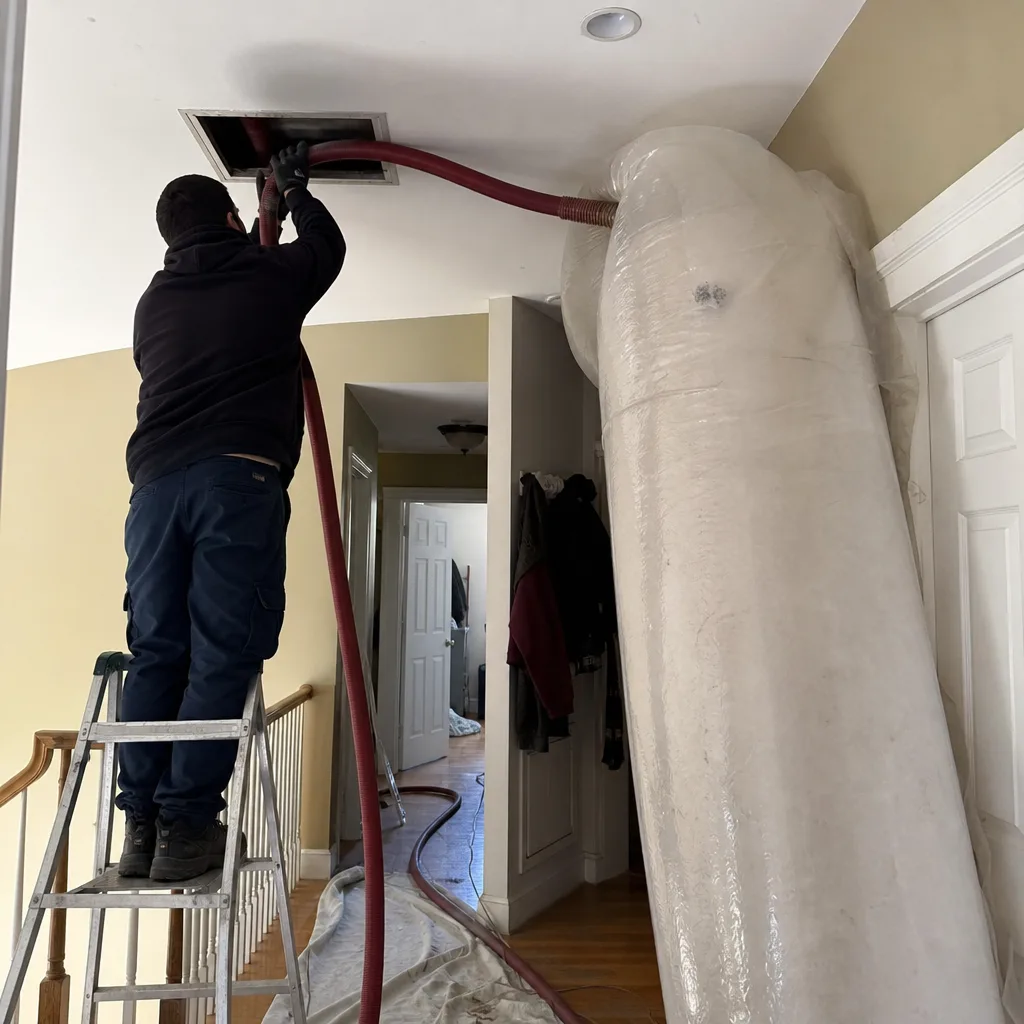
Last updated November 16, 2026
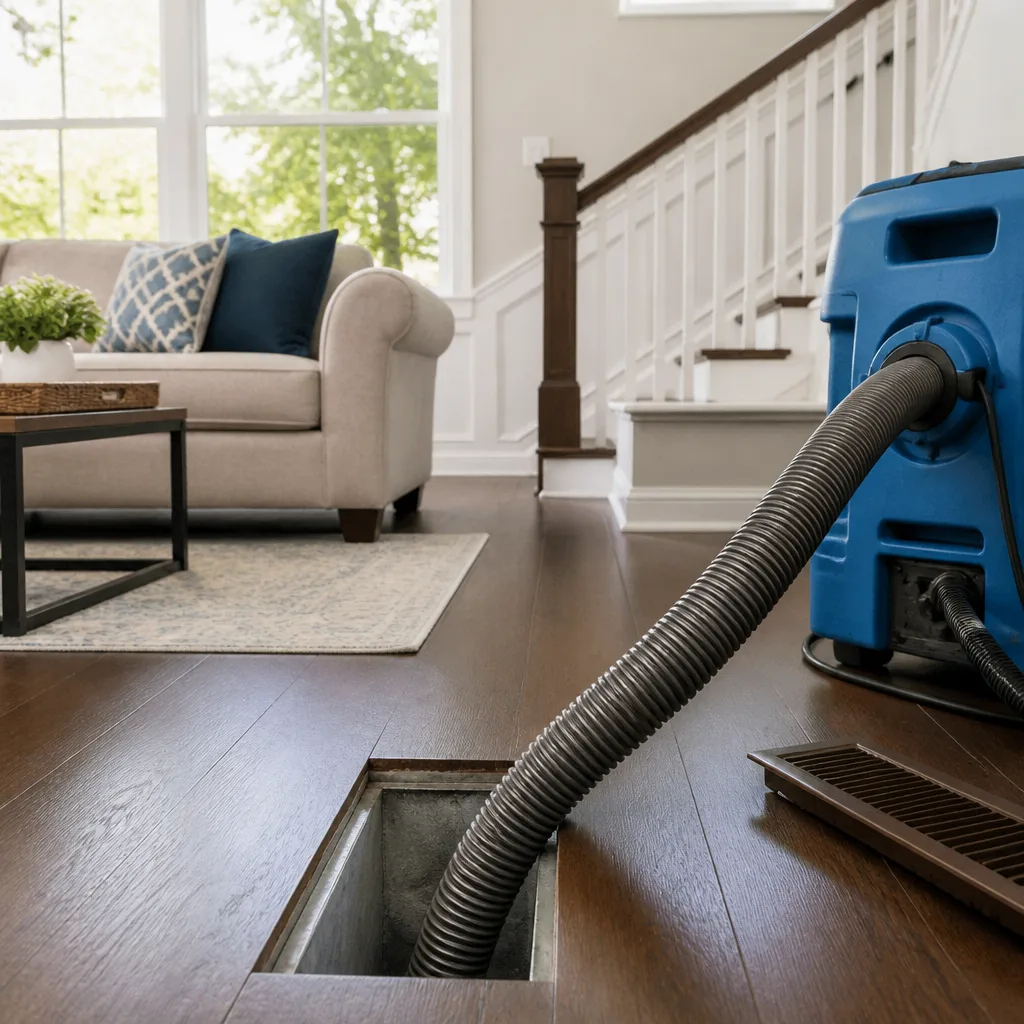 Whole-home duct cleaning
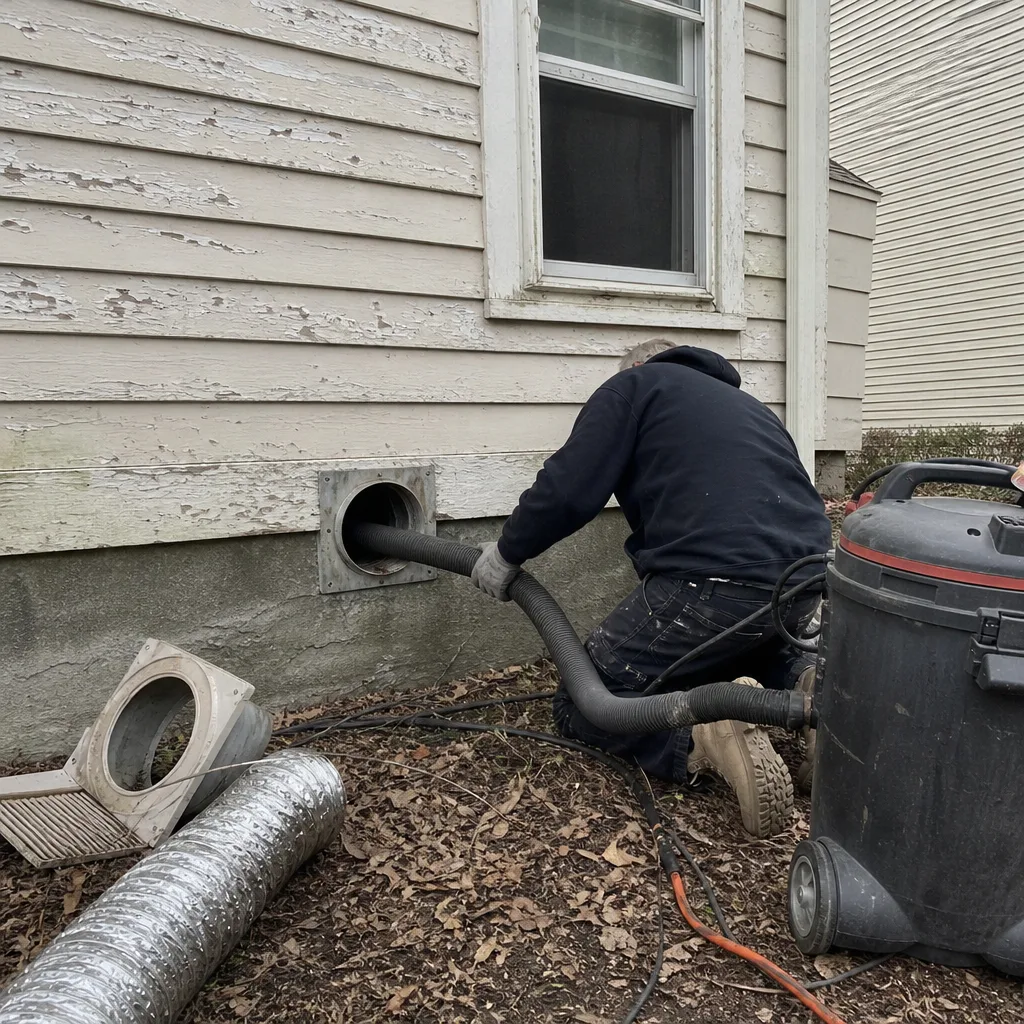
 Dryer vent cleaning
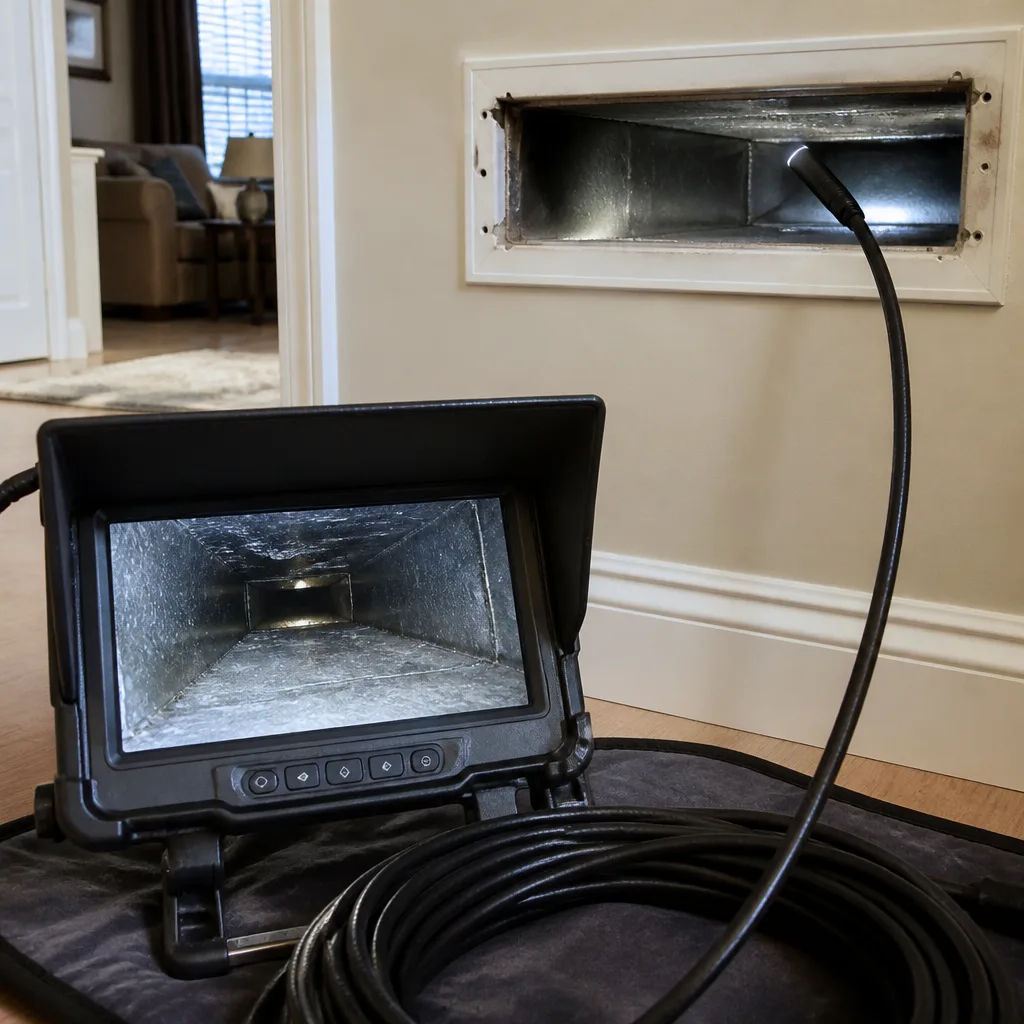 Camera inspection
 Sanitizing & deodorizing
Whole-system duct and dryer vent check with before-and-after photos - you see exactly what came out of your vents
That "$99 whole-house special" is a bait ad - the real number appears once they are in your hallway, or the "clean" is a shop-vac at the register. We photograph the inside of your ducts before and after instead.
Air Duct Cleaning Permits, Codes & Inspections in Providence, RI: What You Need to Know
Most Providence homeowners treat duct cleaning as a chore that flies under the permit radar, and for cleaning alone, that’s usually right. But here’s the detail almost no one mentions: the moment a technician cuts out a section of duct and replaces it, adds a new run, or resizes a trunk line, the job crosses out of cleaning and into mechanical work that Rhode Island regulates. Some of the companies quoting that work can’t legally perform it. This guide walks through where the line sits, what Providence’s inspection process actually looks like, and what to put in writing before anyone touches your ductwork.
Quick Answer
Plain air duct cleaning is a maintenance service and generally does not require a permit in Providence. Air duct repair that modifies the duct system itself – cutting out and replacing duct sections, adding or rerouting runs, changing fittings or sizing – is mechanical work under the Rhode Island Mechanical Code, and that work typically requires a mechanical permit pulled by a licensed contractor, followed by a city inspection. Cleaning and repair are two different scopes with two different legal thresholds, and you should know which one you’re buying before the work starts.
Styles & brands we work with
- Whole-home duct cleaning
- Dryer vent cleaning
- Camera inspection
- Sanitizing & deodorizing
Table of Contents
- Where Duct Cleaning Ends and Duct Repair Begins
- When a Mechanical Permit Is Required in Providence
- How the Providence Inspection Process Works
- What Unpermitted Duct Work Costs You at Sale
- Cleaning Company vs. Licensed HVAC Contractor
- Post-Fire and Post-Flood Duct Restoration
- What to Request in Writing Before Duct Repair
- How to Choose a Duct Contractor in Providence
Where Duct Cleaning Ends and Duct Repair Begins
This is the distinction that matters most, and it’s the one homeowners ask about least because they don’t know it exists. Cleaning removes accumulated dust, debris and biological growth from the inside of duct surfaces. Repair changes the physical duct system – the materials, the joints, the layout. One is housekeeping. The other is construction, and construction is regulated.
In our experience, the crossover usually happens mid-job. A technician opens a return plenum and finds a collapsed flex run, a disconnected joint behind a wall, or duct board that’s been soaked and has lost its integrity. Cleaning that section won’t help. It has to come out. At that point the work has moved from cleaning to repair, and the rules change.
Here’s a working breakdown of what typically sits on each side of the line:
- Cleaning-side work: source removal of debris with negative-pressure equipment and contact cleaning, sealing small accessible joints with mastic or approved tape, replacing a filter, cleaning the blower compartment.
- Repair-side work: cutting out and replacing a duct section, adding a new supply or return run, rerouting ductwork to serve a finished space, changing duct size, replacing a plenum, installing new fittings or transitions.
That second list is where Rhode Island’s mechanical code applies. It’s also where a homeowner’s real risk begins, because the person doing the work needs to be licensed to do it. If you’re not sure which kind of job you have, a straight inspection with a camera will tell you. Better to know before the invoice, not after. Our duct cleaning Providence team walks homeowners through exactly this distinction on every estimate.
When a Mechanical Permit Is Required in Providence
The Rhode Island Mechanical Code governs the installation, alteration, repair and replacement of mechanical systems, and ductwork is part of that system. Cleaning a duct is not an alteration. Cutting, replacing, rerouting or resizing one is. When the work falls on the alteration side, a mechanical permit is generally required, pulled by the licensed contractor performing the work, not by the homeowner.
A few practical points that catch people off guard:
- Replacing a section of duct because it’s damaged still counts as an alteration in most readings of the code. The exemption people assume exists for “small repairs” usually doesn’t apply to duct modification.
- A permit isn’t a formality – it triggers an inspection, and the inspection is what creates the record that the work was done to code.
- Sealing and cleaning are generally treated differently from replacement. A contractor who tells you a permit is needed to clean your ducts is either confused or upselling.
Providence is an old housing stock city. Neighborhoods like Federal Hill, Fox Point and Mount Pleasant are full of homes where original ductwork has been patched, extended and re-taped by several generations of owners. When a contractor opens that up and finds non-compliant work underneath, the repair scope grows and so does the permit requirement. This is why a written scope, agreed before work begins, protects you – the price doesn’t shift because a surprise turns up behind a wall. If you want a straight read on whether your job is cleaning or repair, an inspection is the fastest way there. Our Providence air duct cleaning service includes that assessment before anyone picks up a tool.
How the Providence Inspection Process Works
When a mechanical permit is pulled for duct repair, the work is inspected in stages. The contractor is responsible for requesting the inspection; the homeowner’s responsibility is to confirm it actually happened before the job is considered closed. If the contractor doesn’t call for it, the permit can sit open indefinitely, and an open permit can complicate a future sale.
Here’s the sequence in most cases:
- Permit application. The licensed contractor files with the city, listing the scope and location of the mechanical work.
- Rough-in inspection. The inspector reviews the ductwork after it’s installed or altered but before it’s closed in – this is where duct connections, support and material compliance get checked.
- Final inspection. Once everything is in place, the inspector signs off. This is the step that gives you a documented record the work met code.
The part homeowners miss: no one calls you to confirm the final inspection passed. You have to ask. And you should ask in writing, get the inspection result, and keep it with your home records. For a property manager handling several Providence units, a simple log of permit numbers and inspection dates per address prevents a lot of problems later.
Providence’s aging housing also affects timing. Older homes often need the inspector to see more than one stage, and permits can stall if the contractor disappears or changes hands mid-job. Staying on top of it is your job as the property owner, even though the contractor is the one who filed.
What Unpermitted Duct Work Costs You at Sale
An unpermitted duct modification is a hidden liability until it isn’t. It surfaces most often during a home sale, when a buyer’s inspector notes signs of recent ductwork alteration with no permit on record. At that point the seller is the one who has to resolve it, and the clock is already running on a transaction.
A few things happen when ductwork changes show up without a permit:
- The buyer’s attorney may request documentation, and there may be none to provide.
- The city may require the work to be inspected retroactively, which can mean opening walls or duct assemblies to access it.
- If the alteration doesn’t meet code, correction becomes the seller’s cost, often under negotiation pressure.
The tell is usually visual: shiny new flex in a system otherwise coated in old dust, fresh tape lines, mismatched fittings, or a run that doesn’t match the rest of the installation. When a Providence home is sold, an inspector looking for evidence of recent alteration will flag exactly those cues.
The fix is simple and costs nothing up front: confirm a permit was pulled before work begins, and keep the inspection record. If you’re a property manager or you’ve inherited work from a prior owner, a visual inspection of accessible ductwork is worth doing now. Our Providence service page covers how we assess and document that condition for owners who need a clean record.
Cleaning Company vs. Licensed HVAC Contractor
This is where a lot of duct companies run into trouble, and where homeowners should be careful. Cleaning ductwork with professional equipment – negative-pressure machines, contact cleaning tools, HEPA containment – is a maintenance service. Performing mechanical alteration on a duct system is licensed mechanical work. Those are two different legal categories, and not every duct cleaning company holds the second one.
In Rhode Island, duct repair that alters the system requires a licensed contractor. A cleaning-only company may clean your ducts, but if it discovers a damaged section and offers to cut it out and replace it, that scope of work requires a licensed contractor and a permit. If they can’t legally pull the permit, you have a problem, not a repair.
So how do you tell? Ask directly: “Do you hold a Rhode Island mechanical or HVAC contractor license, and will you pull a permit for this scope?” A straight answer is fast. If it comes back vague, that’s your answer.
We’re aware of the difference here because it shapes how we work. Duct Cleaning Providence cleans with professional-grade systems – a Rotobrush contact cleaning rig and Nikro negative-pressure equipment, with Abatement Technologies HEPA containment where the job calls for it. We also clean dryer vents, which is a separate safety service most duct-cleaning competitors skip. But when the scope moves from cleaning to mechanical alteration, we’re clear with the homeowner about what’s required. It’s the honest way to work in a city where the housing stock makes surprises common.
Post-Fire and Post-Flood Duct Restoration
Restoration work after a fire or flood is the case where cleaning, repair and code compliance all meet at once. Smoke and water travel through duct systems, which means surface cleaning alone often doesn’t reach the problem. In many restoration scenarios, ductwork has to be partially removed and replaced, which turns the job into permitted mechanical work and opens an insurance question.
Here’s how the pieces connect:
- Insurance. Most homeowner policies cover duct restoration following a covered loss, but the insurer will want documentation of the scope and the work performed. A written scope and before-and-after records support the claim.
- Code compliance. When the restoration includes replacement or alteration of the duct system, the work should be permitted and inspected just like any other mechanical alteration. A restoration contractor who skips the permit leaves a gap that can surface later.
- Documentation. Photos, a written scope, and the inspection record are what a homeowner keeps and what an insurer will ask for.
Our technicians have up to 13 years of experience working through exactly this kind of restoration job. They’ve seen how quickly post-flood duct board loses structural integrity and how smoke residue settles into places a shop-vac can’t reach. HEPA containment matters here – not as a marketing term, but because you’re working in an occupied home. If your restoration also includes your dryer vent, that’s a safety item worth addressing in the same visit. Our dryer vent cleaning service handles it.
What to Request in Writing Before Duct Repair
The single best protection against permit problems is a written scope, agreed before work begins, that separates cleaning from repair. You want it in writing, not in a verbal quote. Here’s what should appear in it:
- The scope of work, listing what’s being cleaned versus what’s being replaced or altered, with locations.
- Whether a permit will be pulled, and by whom, with the license under which it’s filed.
- The material specifications for any replacement duct (type, rating, insulation) so the inspection has something to check against.
- Before-and-after photos of the ductwork as it was found and as it was left, which supports both your record and any insurance claim.
- Warranty terms on the repair, stated plainly – what’s covered, for how long, and what voids it.
- The final inspection result, once the work is complete, so you hold the record.
Ask for the permit number if one is pulled and keep it. Ask for the inspection sign-off once it passes. If the job is cleaning only and no permit applies, that’s fine – but get the written scope anyway, because it protects you if a “small repair” suddenly becomes part of the invoice. Our full-service scope covers air duct cleaning, air duct repair and dryer vent cleaning, and we put the scope in writing before anyone starts.
How to Choose a Duct Contractor in Providence
The market for duct services in Providence ranges from licensed mechanical contractors to companies whose entire toolkit is a truck-mounted vacuum and a promise. The differences matter most when the job turns out to need more than cleaning, so it’s worth choosing a contractor before you know which kind of job you have. A few filters that help:
- Ask about equipment. A contractor who can name the systems they use – Rotobrush contact cleaning, Nikro negative-pressure, Abatement Technologies HEPA containment – is telling you something. Names signal real equipment. Vagueness signals the opposite.
- Ask about repair capability. A company that only cleans will hand you off when the job gets complex. One that repairs can assess and address the whole scope, which saves you a second contractor and a second permit question.
- Ask what a quote covers. A whole-system price, agreed before work starts, is the right structure. Per-vent pricing invites creep and doesn’t reflect the actual work.
- Ask for proof after the work. Before-and-after photos of your own ducts should come standard, not on request.
We recommend Honeywell and Aprilaire filtration products when a cleaning uncovers filter or air quality issues, because the right filter is often the cheapest real improvement a homeowner can make. Our technicians have up to 13 years of experience, and we work with Guardsman protective products to keep surfaces and systems protected during service. That’s the practical side of the choice: not who has the flashiest quote, but who can explain what they found and back it up.
Common Mistakes to Avoid
- Assuming cleaning needs a permit – or that repair doesn’t. Cleaning is maintenance and generally doesn’t. Altering ductwork does. Confusing the two either costs you a needless permit or leaves you with unpermitted work.
- Trusting a verbal scope. If the scope isn’t in writing with cleaning and repair listed separately, you have no record if the job changes mid-stream. Get it in writing before work begins.
- Skipping the permit on duct repair. A contractor who offers to “just do it without the paperwork” is shifting the risk to you. The permit and inspection record belong to you, not them.
- Hiring a cleaning-only company for a repair job. Rhode Island requires a licensed contractor for mechanical alteration. A cleaning company can’t pull that permit, and if they proceed anyway, the work is out of compliance from the start.
- Not keeping the inspection sign-off. The final inspection result is your evidence the work met code. Not keeping it means you have to reconstruct the record later, often under time pressure during a sale.
- Ignoring the dryer vent. Duct cleaning visits are a natural point to address dryer vent safety, and most pure duct-cleaning companies won’t raise it. It’s a documented fire risk, not an upsell.
- Assuming a low quote is the whole price. In this trade, teaser pricing is common. A whole-system price agreed in writing before work starts is the structure that protects you from the invoice surprise.
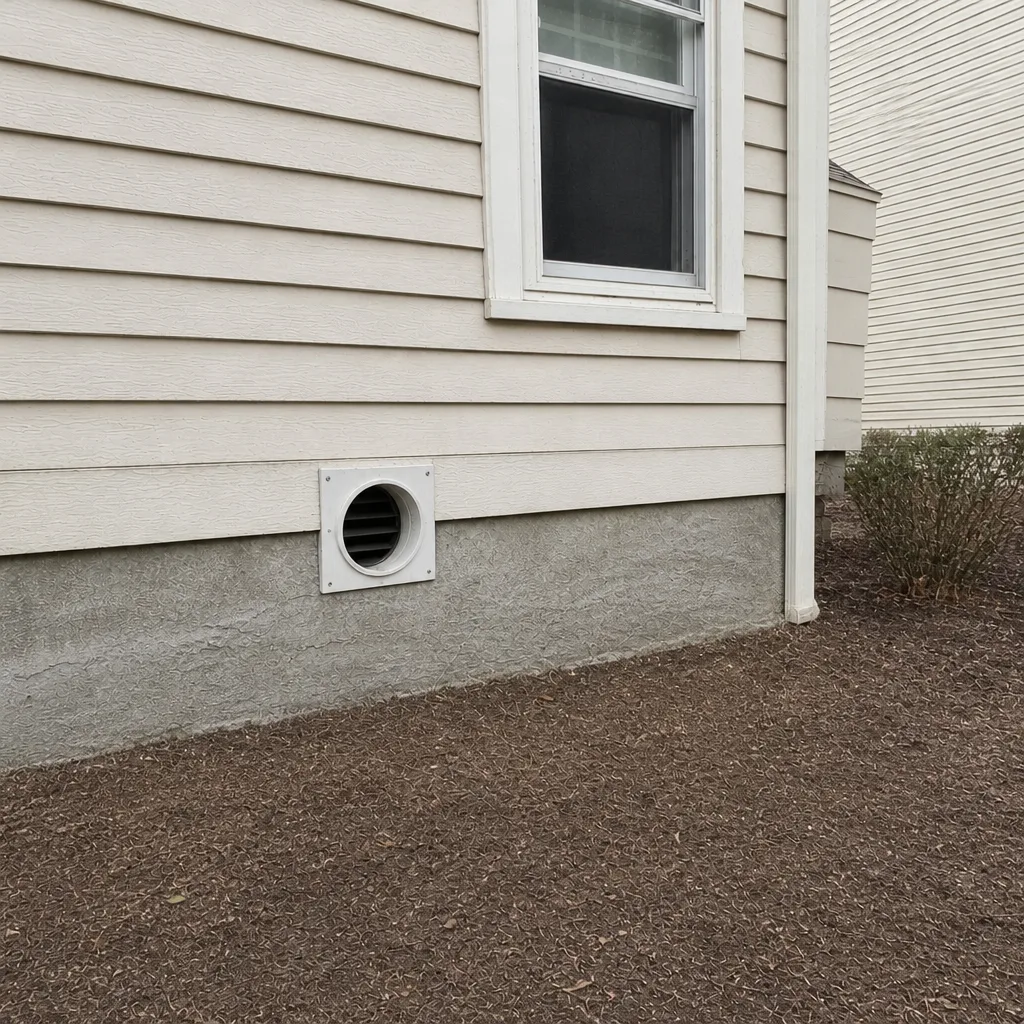
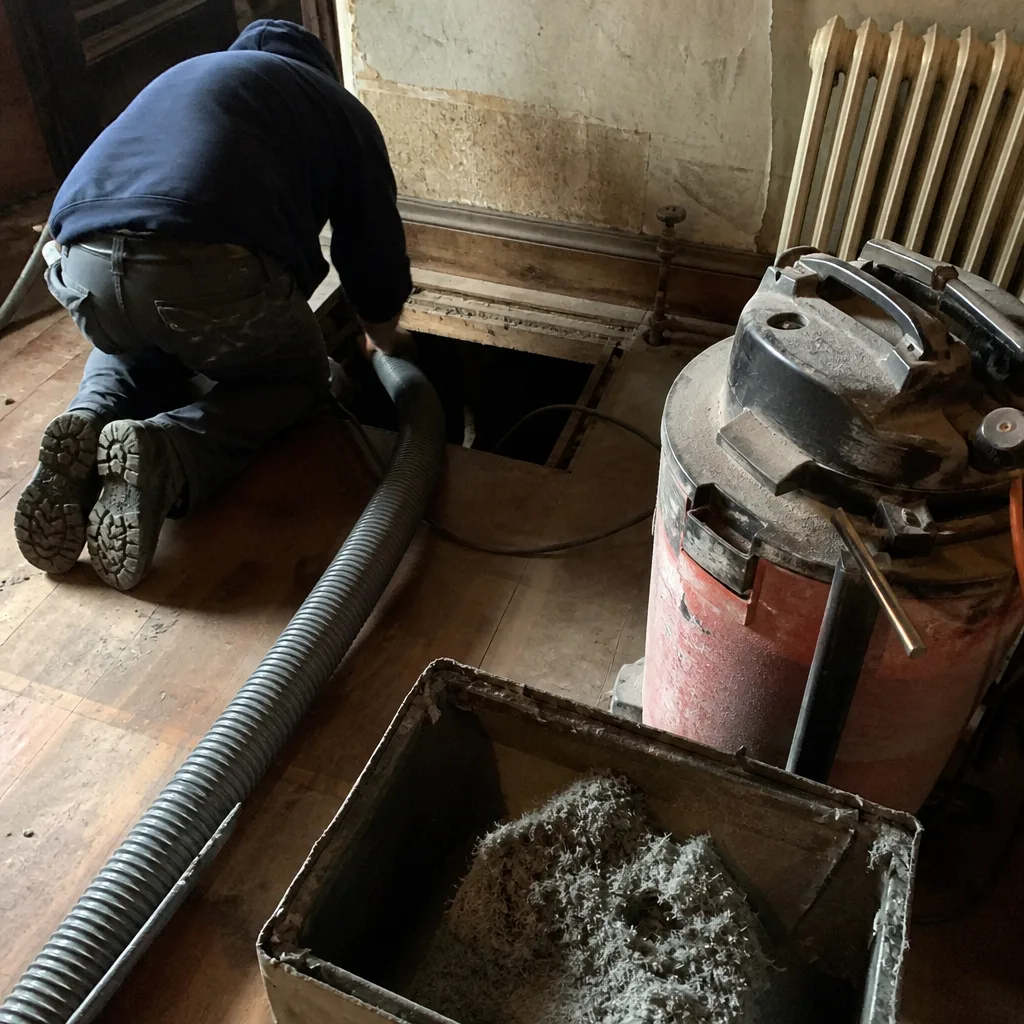
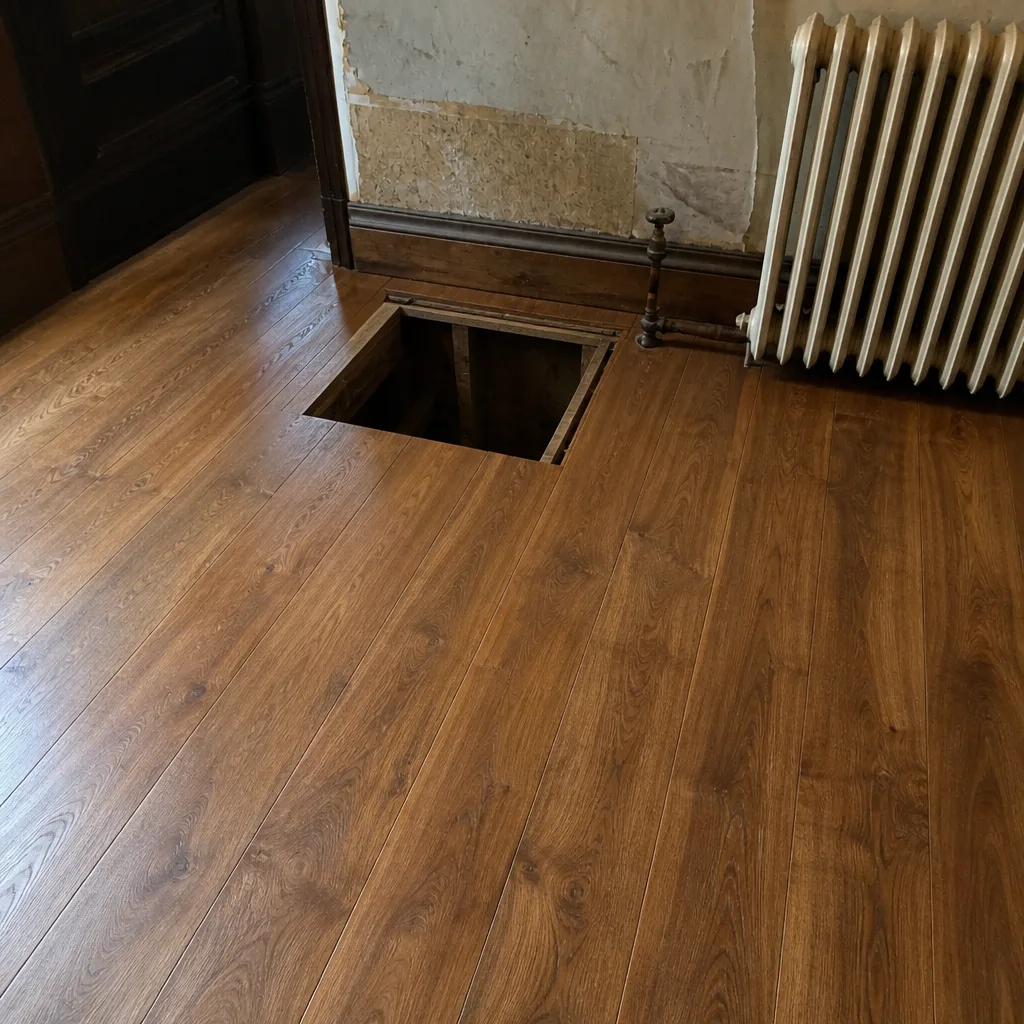
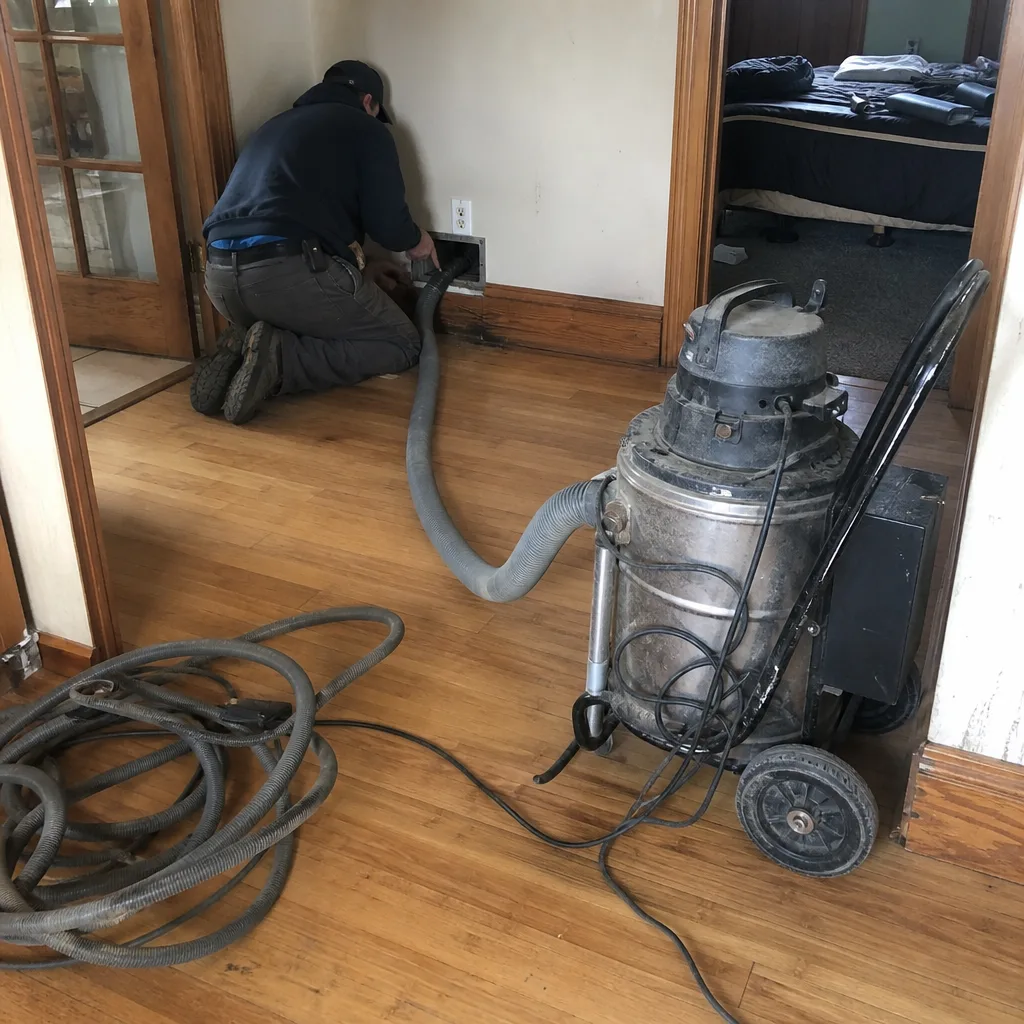
See the difference
 Before
 After
 Before
 After
 Before
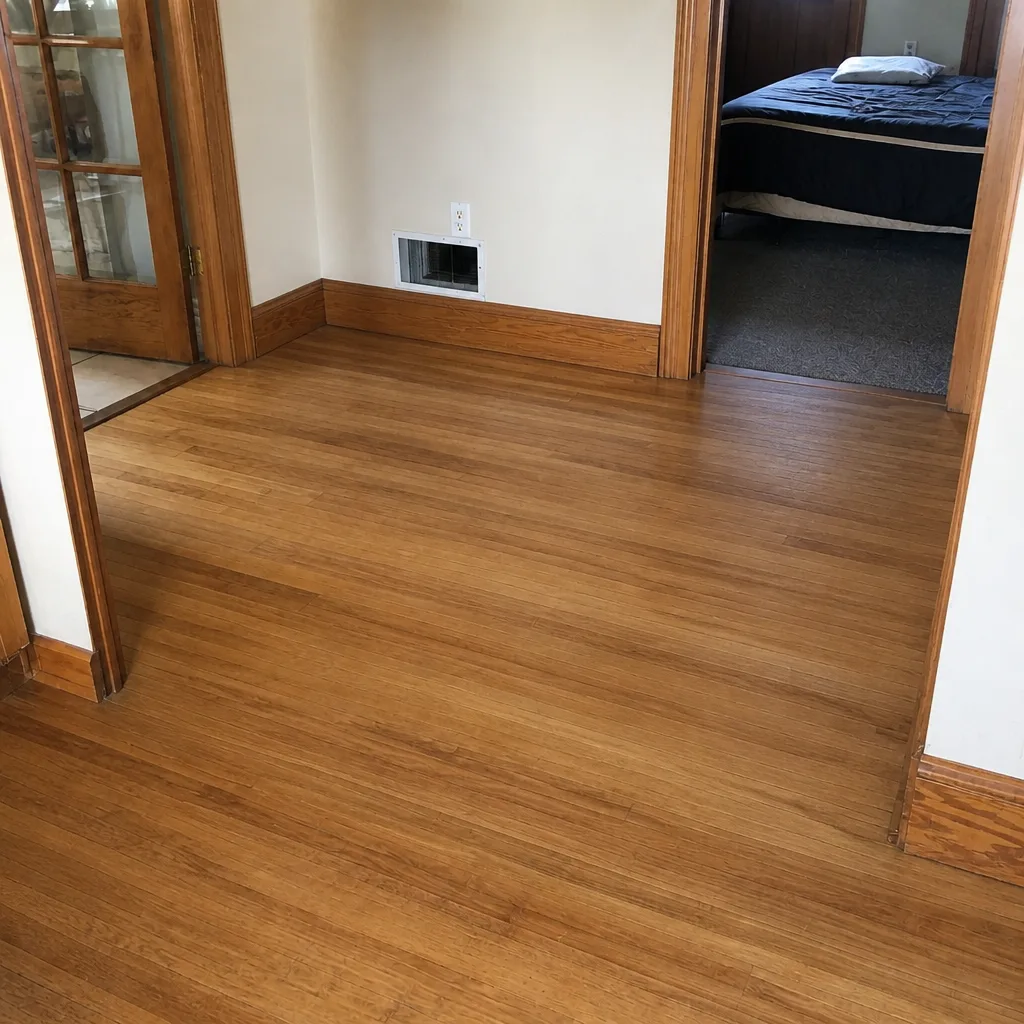 After
When to Call a Professional
Some duct problems are obvious – visible dust blowing from vents, a musty odor that won’t clear, a system that’s clearly struggling. Others are invisible until someone opens the ductwork. The moment you suspect a physical problem with the duct system itself, that’s the right time to bring in a professional, because the difference between cleaning and repair changes the cost, the permit requirement and the legal scope of who can do the work.
Call a professional if: a contractor has proposed cutting out or replacing duct sections; you’ve had a fire or flood and need restoration documented; you’re preparing to sell and want to confirm no unpermitted duct work exists; your dryer vent has never been cleaned or the dryer is taking longer to dry loads; or a cleaning inspection turns up disconnected joints, crushed flex or non-compliant patched work. Duct Cleaning Providence offers free estimates in Providence – call (844) 542-8739. We answer 24/7. Fast dispatch from 7am to 7pm, Sunday through Friday.
Frequently Asked Questions
No. Routine air duct cleaning is a maintenance service and generally doesn’t require a permit in Providence. The permit threshold comes in when the work alters the duct system – cutting out and replacing sections, adding or rerouting runs, changing sizing or fittings. That work is mechanical alteration under the Rhode Island Mechanical Code and typically needs a permit pulled by a licensed contractor, followed by an inspection. If you’re unsure which category your job falls into, call (844) 542-8739 for a straight answer – estimates are free.
Only if they hold the appropriate Rhode Island contractor license. Cleaning is a maintenance service anyone with the right equipment can provide. Mechanical alteration of ductwork requires a licensed contractor, and a cleaning-only company legally can’t pull the permit for that scope. Ask any company whether they hold the license and will pull the permit before the work begins. A straight answer is fast. Call (844) 542-8739 for a scope review – estimates are free.
It becomes your problem at the point of sale. A buyer’s inspector may flag recent duct alteration with no permit on record, which can trigger a retroactive inspection, correction costs, or a renegotiation of the sale. The fix is to confirm the permit was pulled before work begins and keep the final inspection sign-off in your records. If you’ve inherited unpermitted work, a written inspection report establishes what’s there. Call (844) 542-8739 to book an assessment – estimates are free.
It depends on the scope. If the restoration is cleaning only, no permit applies. If it includes replacing or altering duct sections, the work is mechanical alteration and should be permitted and inspected just like any other duct modification. Documentation matters too – your insurer will likely ask for a written scope and proof of the work performed. Call (844) 542-8739 to talk through your situation – estimates are free.
The line is whether the duct system’s physical structure changes. If the work removes debris and seals small accessible joints, it’s cleaning. If it cuts, replaces, reroutes or resizes ductwork, it’s repair and mechanical code applies. A camera inspection on-site is the fastest way to know. Call (844) 542-8739 to book one – estimates are free.
Five questions cover most of it: What’s the exact scope, cleaning versus repair? Will you pull a permit for the repair scope, and who’s the licensed contractor filing it? What materials will you use for any replacement? Will I get before-and-after photos of my own ducts? And what are the warranty terms, in writing? A contractor who answers all five without hesitation is a good sign. Call (844) 542-8739 for a written scope and estimate – free, with fast dispatch from 7am to 7pm, Sunday through Friday.
The Bottom Line
Duct cleaning in Providence is a maintenance service. Duct repair is regulated mechanical work, and the difference is defined by whether the duct system’s physical structure changes. That single line determines whether a permit is required, whether a licensed contractor must perform the work, and whether you have a documented inspection record to protect a future sale. Before any duct job, get the scope in writing, confirm who’s licensed, and keep the permit and inspection record in your home files. Duct Cleaning Providence cleans, repairs and documents the work so the record is clean when you need it. Call (844) 542-8739. We answer 24/7. Fast dispatch from 7am to 7pm, Sunday through Friday.
Written by the team at Duct Cleaning Providence.