
Last updated November 16, 2026
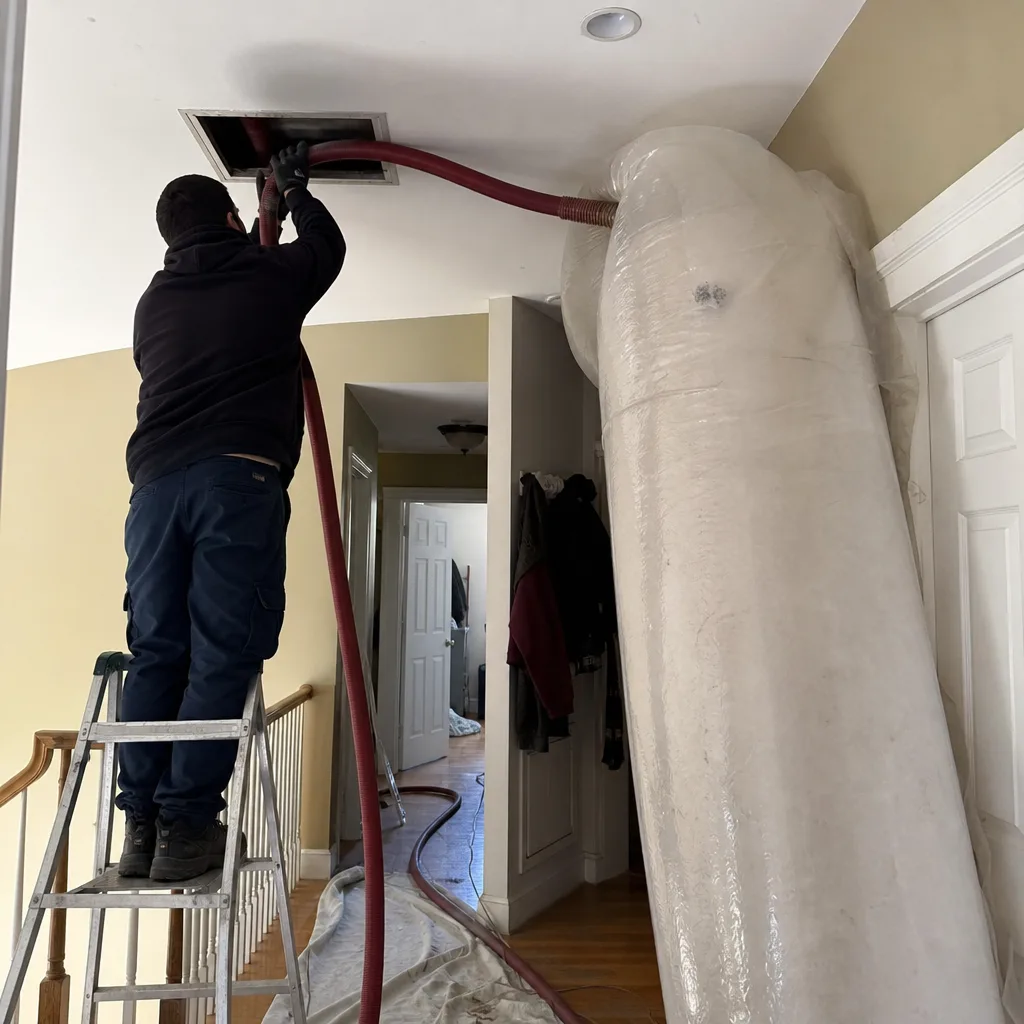
 Whole-home duct cleaning
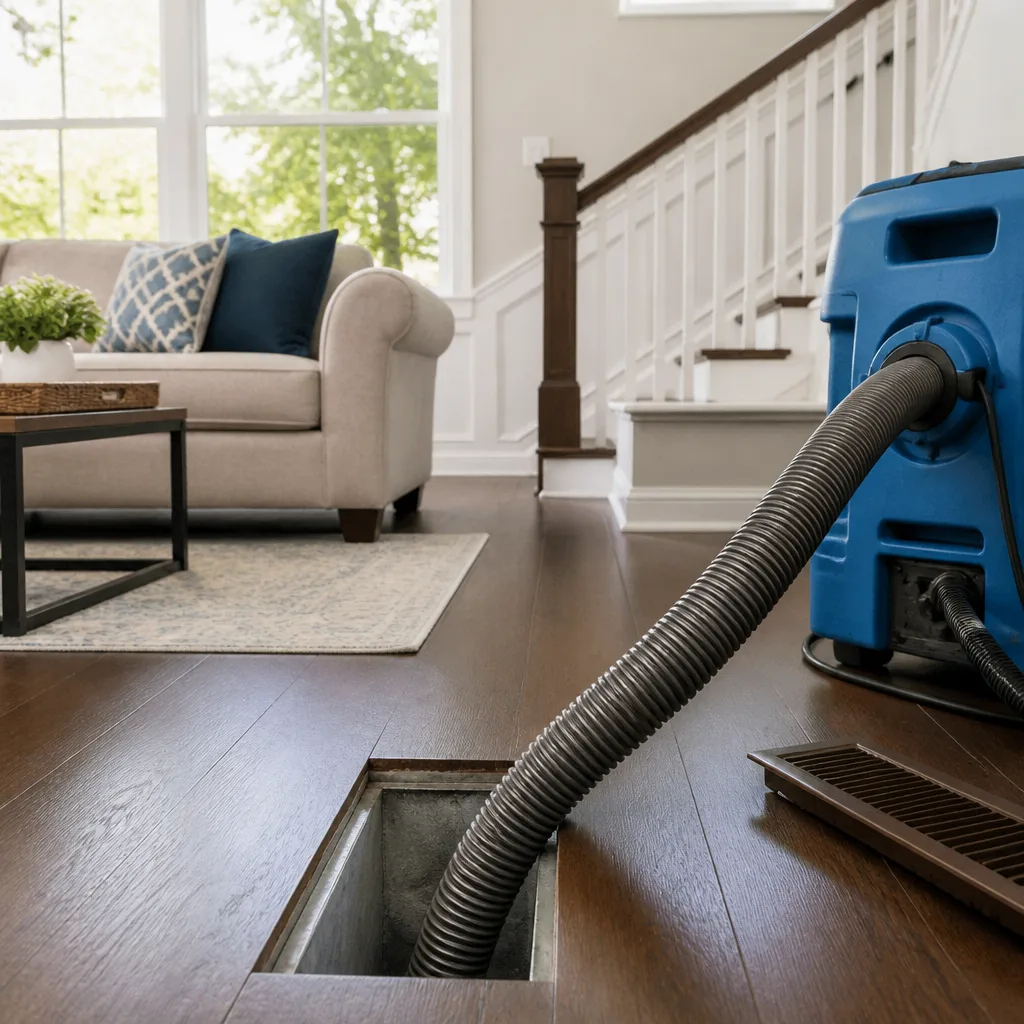
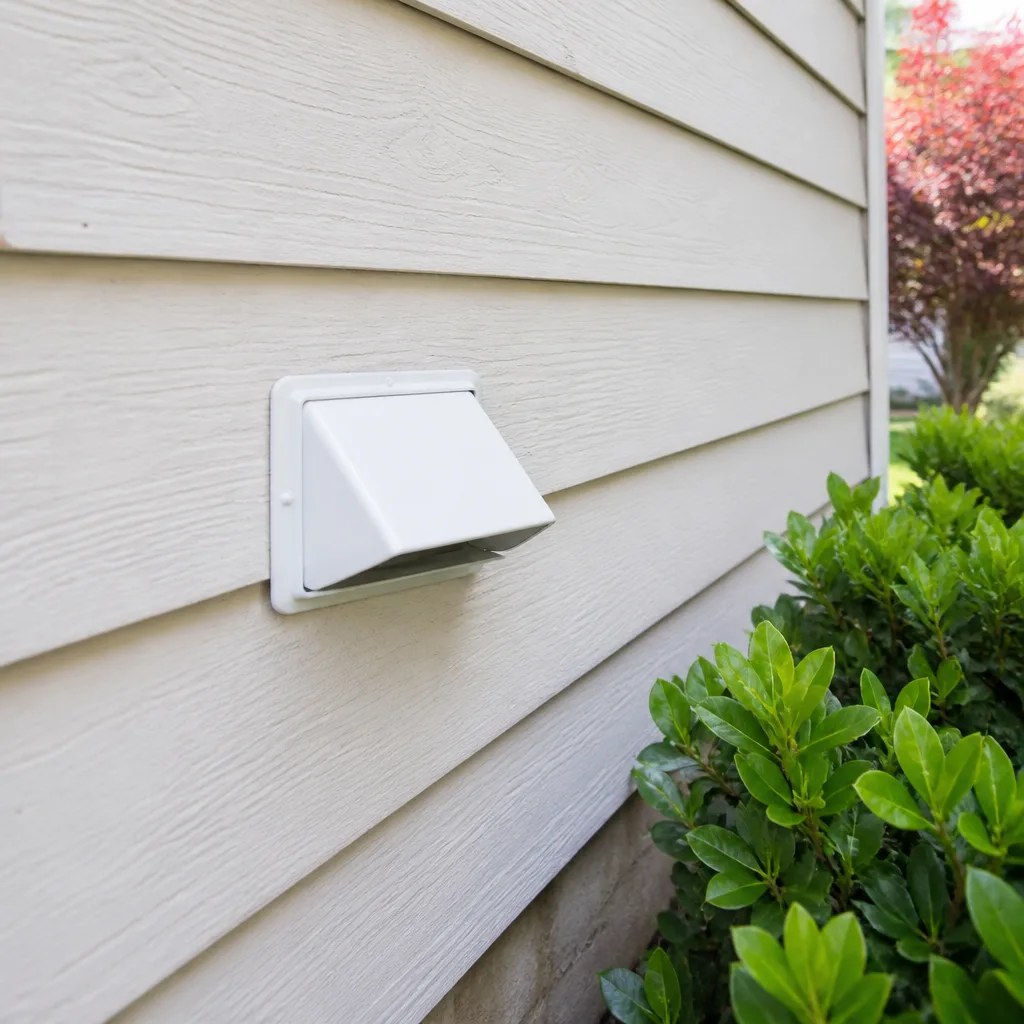 Dryer vent cleaning
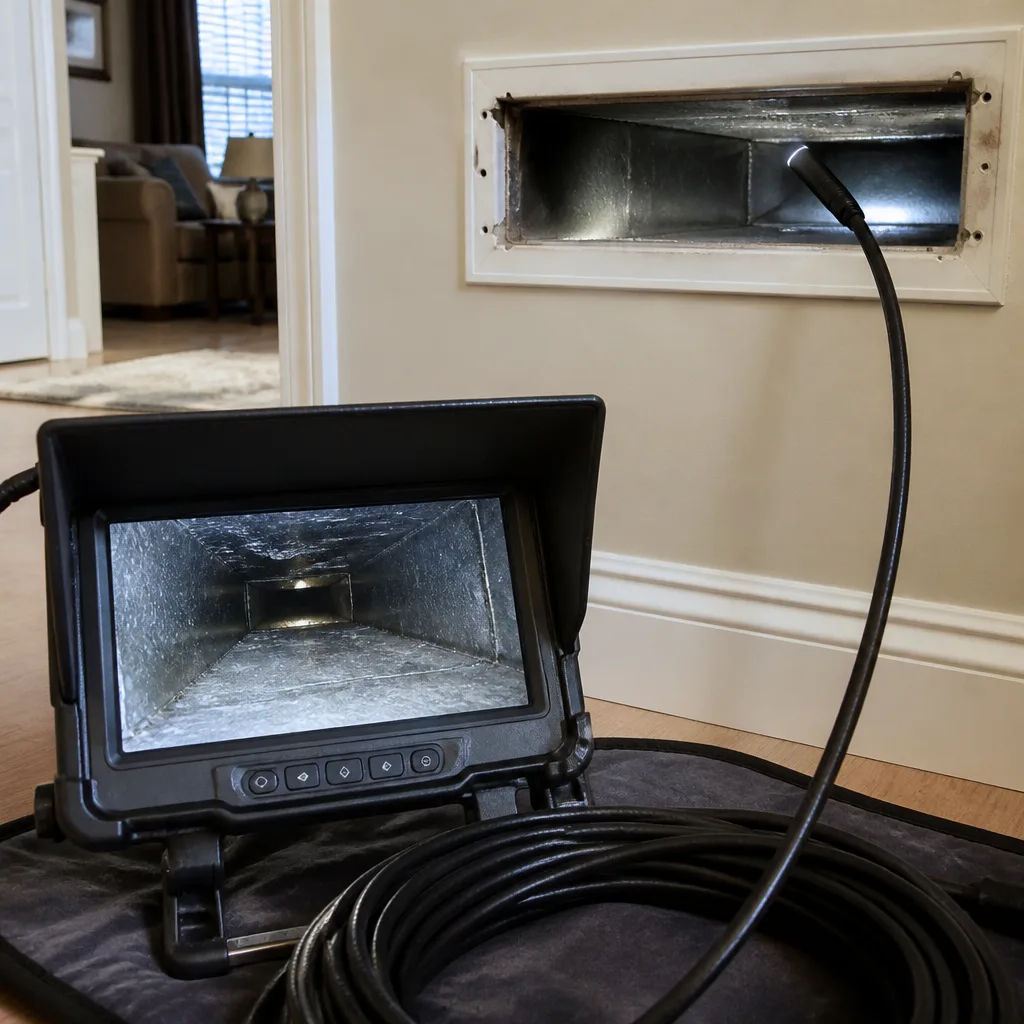 Camera inspection
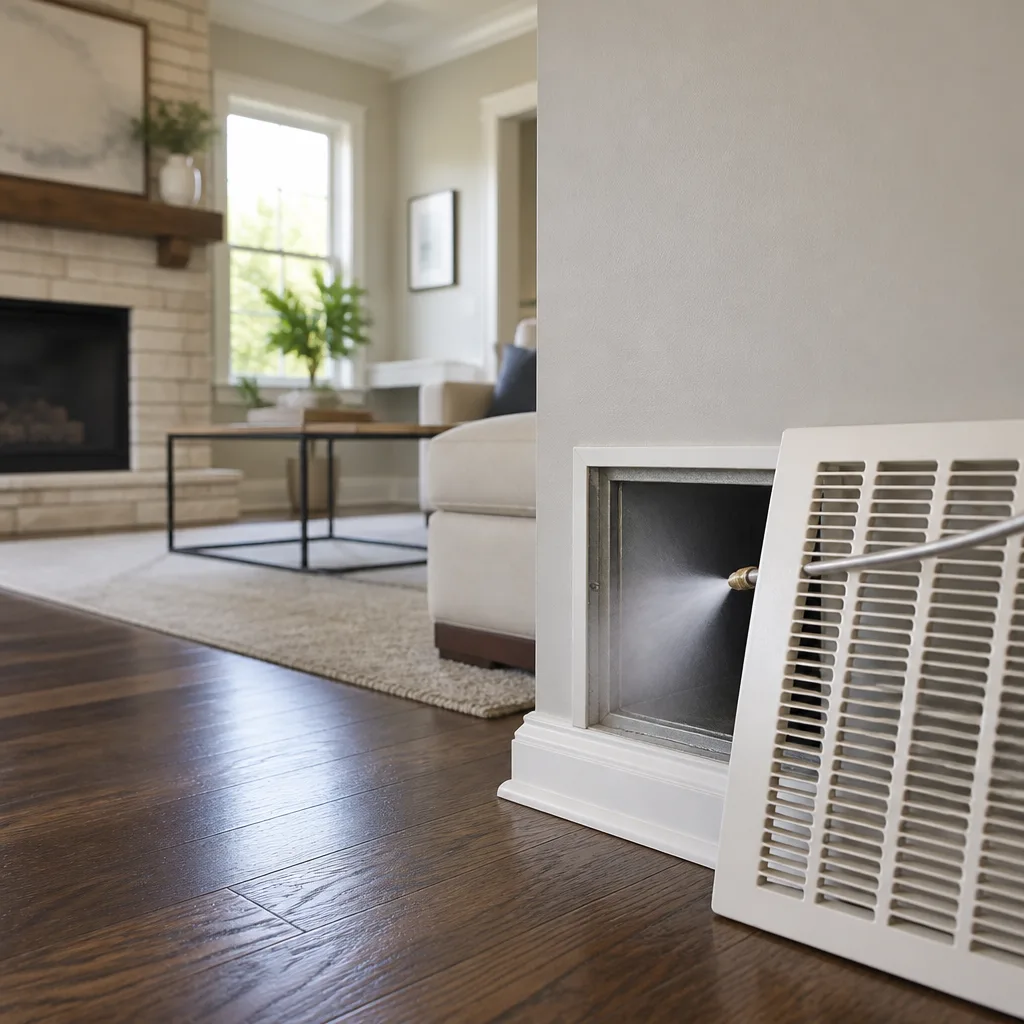 Sanitizing & deodorizing
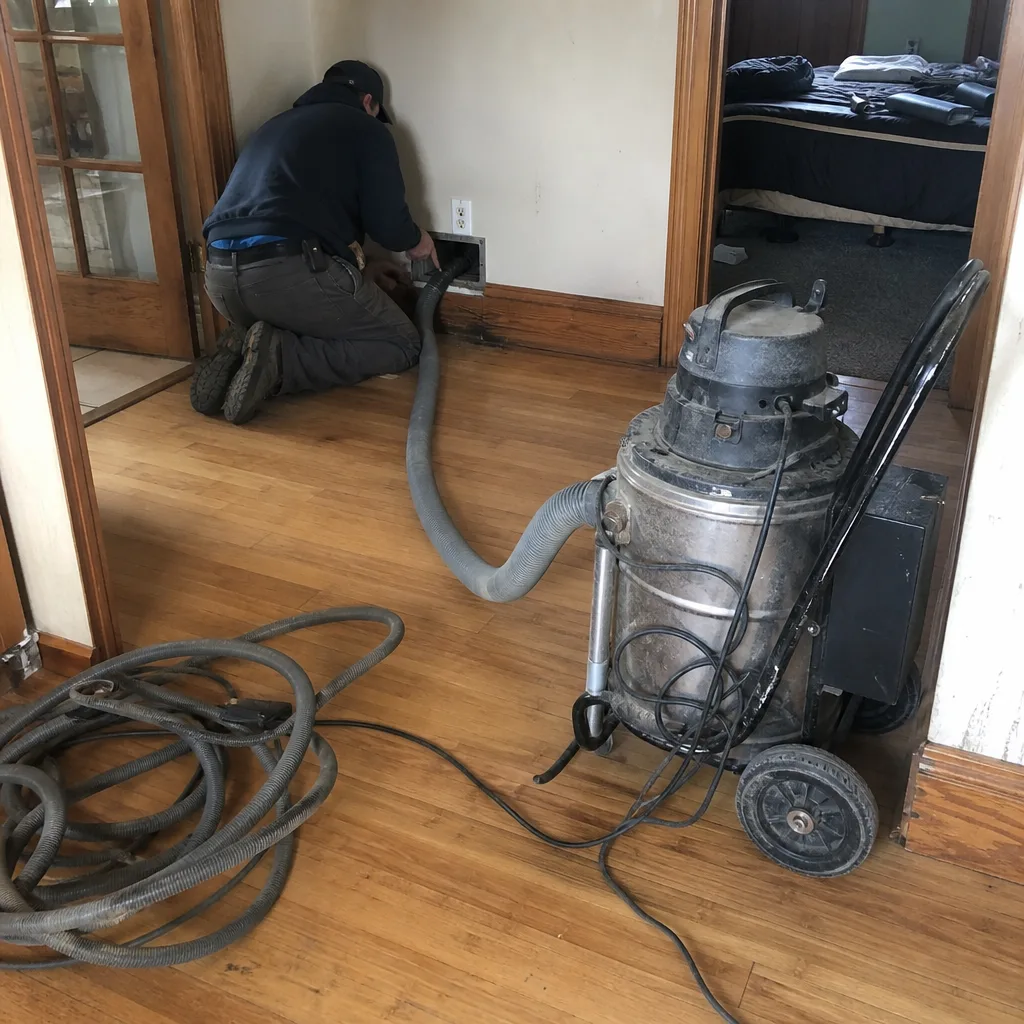
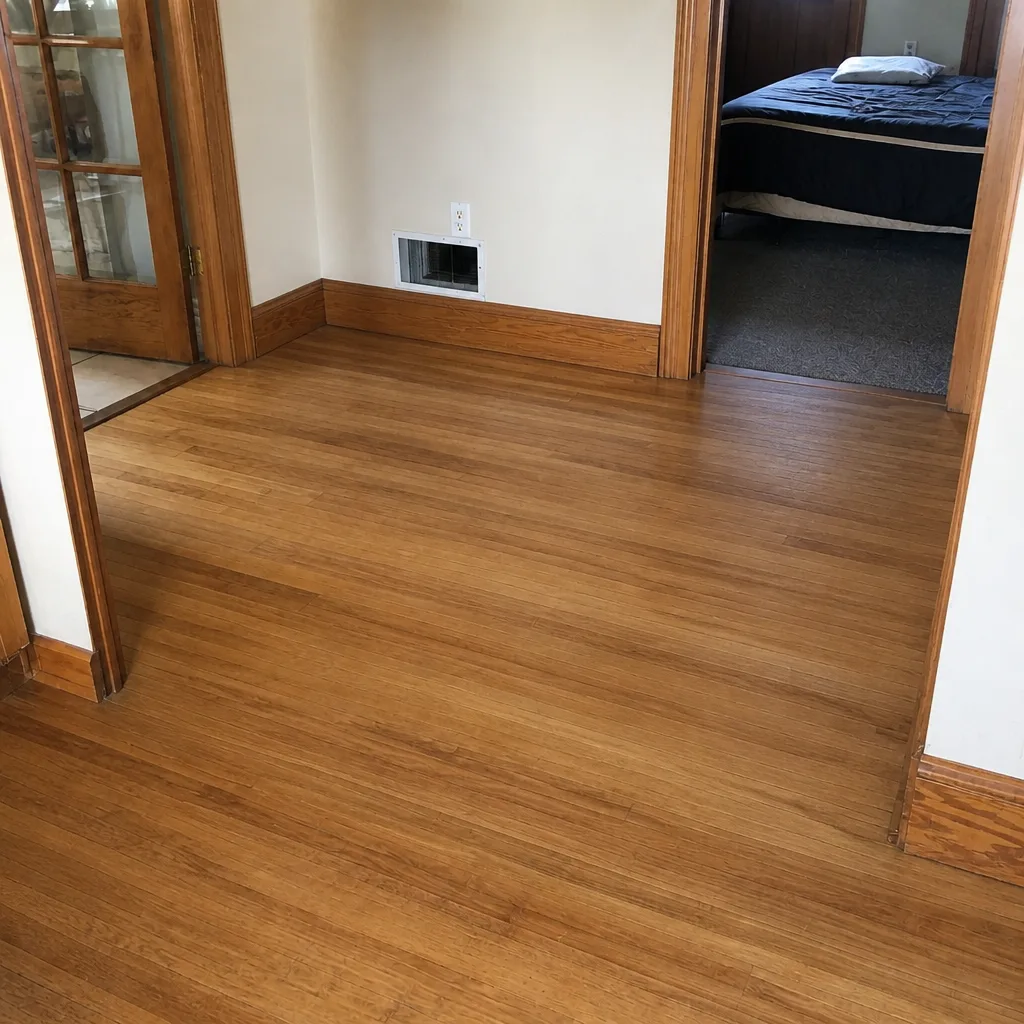
Whole-system duct and dryer vent check with before-and-after photos - you see exactly what came out of your vents
That "$99 whole-house special" is a bait ad - the real number appears once they are in your hallway, or the "clean" is a shop-vac at the register. We photograph the inside of your ducts before and after instead.
How to Hire an Air Duct Cleaning Contractor in Providence: A Step-by-Step Guide
Rhode Island does not license air duct cleaners. There is no state exam, no trade board review, no minimum equipment standard, and no required continuing education to hang a shingle and start charging homeowners for duct work. That single fact explains most of what goes wrong in this trade, and it’s the reason a homeowner in Providence has to do the vetting themselves. The companies doing genuinely technical work and the ones running a shop-vac with a printed invoice are working under the same regulations: none. Our technicians have up to 13 years of experience, and the difference between a real cleaning and a cosmetic one comes down to equipment, process, and what’s written on the estimate before anyone touches your ducts. This guide walks through the exact questions to ask, the quote line items that separate thorough work from cut corners, and the red flags that show up in the Providence market specifically.
Quick Answer
To hire an air duct cleaning contractor in Providence, ask three equipment questions before you book: what negative-pressure machine and CFM rating they use, which contact-cleaning system they run, and what HEPA filtration stage they bring for containment. Then insist on an in-person walkthrough before any price is quoted, and get a line-item written estimate that names the equipment, the access points, and the scope. If any of those three details is missing, you’re looking at a lower-grade operation, regardless of how the company markets itself.
Styles & brands we work with
- Whole-home duct cleaning
- Dryer vent cleaning
- Camera inspection
- Sanitizing & deodorizing
Table of Contents
- Why Rhode Island’s lack of licensing changes how you vet a contractor
- The five equipment questions to ask before you book
- How to read a duct cleaning quote in Providence
- What NADCA membership actually requires (and why the logo alone isn’t enough)
- What a legitimate pre-job walkthrough looks like
- Providence-specific red flags
- Cleaning versus repair: knowing which one you need
- The dryer vent question every homeowner should ask
Why Rhode Island’s Lack of Licensing Changes How You Vet a Contractor
In states with formal duct cleaning licensure, a homeowner can check a database and move on. Rhode Island doesn’t have that system, which means the barrier to entry into this trade is essentially a vehicle, some printed materials, and a phone number. That’s not a theory we’re raising for effect. It’s the practical reality behind why two estimates on the same Providence house can differ by a factor of three, and why the cheaper one so often ends with a technician spending forty minutes in the basement and leaving without meaningful results.
Because there’s no license class to verify, your vetting has to be technical rather than administrative. You can’t confirm a credential, so you confirm equipment, process, and scope. Those three things are far harder to fake than a logo on a website, and they correlate directly with whether the work gets done properly.
Where licensing gaps do get partially covered is at the local level. Most cities in Rhode Island require a permit for structural work, and any contractor doing duct repair that involves modifying the building envelope may need to pull one. Ask the Providence building department directly if a repair scope requires a permit; don’t take a contractor’s word for it. That’s not a red flag on the contractor, it’s just the correct process.
For homeowners who want the broader picture of what duct cleaning actually accomplishes and how it fits into a home’s air system, our duct cleaning Providence page covers the fundamentals. The point of this guide is the vetting side: how to pick the person who shows up.
The Five Equipment Questions to Ask Before You Book
Any legitimate duct cleaning contractor should be able to answer these five questions on the phone, without checking with anyone, in specific terms. The answers matter more than the marketing copy on their website.
- What negative-pressure machine do you use, and what CFM does it pull? A negative-pressure machine creates suction inside the duct system so loosened debris travels toward the collection point rather than into your living space. Professional units from manufacturers like Nikro pull volume far beyond a shop-vac. If the contractor can’t name the brand or state a CFM rating, the “negative-pressure” claim on their website is aspirational.
- What contact-cleaning system do you run? Contact cleaning means the equipment physically scrubs the duct walls, not just sucks air through. Rotobrush systems are the industry-standard contact-cleaning tools; a contractor using one knows what the term means and why it matters. A contractor who describes “blowing out the ducts with compressed air” is describing a method that pushes debris into the system rather than removing it.
- What HEPA filtration stage do you bring for containment? HEPA-grade filtration captures the fine particulate that a standard filter passes through. Abatement Technologies builds professional-grade HEPA containment equipment used across industrial and remediation work. For a Providence household with allergy sufferers, or for any home that recently finished a renovation, HEPA containment is the difference between cleaning the ducts and redistributing drywall dust through the house.
- Do you offer duct repair, or only cleaning? Duct systems develop disconnected joints, crushed flex runs, and leaks at seams and boots. A contractor who can only clean will clean around the damage and leave it. Ask directly whether repair is in their scope, and whether the same visit covers both.
- How do you document the work? Before-and-after photos of the homeowner’s own ducts are the simplest proof that the cleaning happened where it was supposed to. Ask before the appointment if photos are included. If the answer is no, or if photos arrive showing generic stock interiors, you have your answer about the work too.
Why the Equipment Question Separates Contractors Faster Than Anything Else
The equipment question works because it’s binary. A company that has invested in professional-grade tools has made a real capital decision and has staff trained to run them. A company that hasn’t will pivot to price, to speed, or to the phrase “whole-house special” the moment the equipment question lands. You’ll notice the pivot.
Our own equipment stack includes Rotobrush contact-cleaning systems, Nikro negative-pressure machines, Abatement Technologies HEPA equipment for containment, and Guardsman protective products for surface and system protection during service. The point isn’t the brand names in isolation. The point is that every one of those tools is doing a specific job that cheaper equipment cannot do. Professional-grade equipment, not consumer shortcuts, is the single clearest signal of what kind of contractor you’re talking to.
How to Read a Duct Cleaning Quote in Providence
The structure of a quote tells you as much as the number on it. A line-item estimate that breaks out the equipment, the number of supply and return runs, and the scope of the cleaning is a sign of a contractor who actually plans the job. A single lump sum, quoted over the phone, without seeing the house, is a sign of a contractor who plans the invoice, not the work.
Here’s the structure a thorough estimate should follow:
- The system count, named. Supply and return runs identified separately. A house with two systems is scoped as two; a house with one is one. A quote that says “whole house” without a run count is telling you the contractor hasn’t looked.
- The equipment listed. The negative-pressure machine, the contact-cleaning system, and the filtration stage should appear by name or category. This is how you verify the answers from the walkthrough made it into writing.
- Access points identified. Where the technician will cut in, and whether that means new access panels in the basement or attic. Any wall or ceiling openings should be described before work starts.
- Repair line items separated. If the system has leaks, disconnected joints, or crushed flex, repair should appear as its own line. If it doesn’t appear at all, either the contractor didn’t inspect the system or isn’t offering repair.
- The final price agreed before work starts. One flat price per system, in writing, before the technician lifts a tool. This is the single most important protection against the industry’s bait-and-switch reputation.
There’s also a right way to talk about cost ranges. Whole-system cleaning in Providence is a per-job price set by the written estimate, and the estimate should reflect the actual layout of the home. Be suspicious of any price that was quoted before anyone walked the house, and equally suspicious of a price that arrives after the work has started.
What “Per-Vent” Pricing Tells You
When a contractor prices per vent, the incentive structure is backwards. More vents mean a higher invoice, which encourages upselling new vents that were never in scope, and it discourages the deep single-pass clean that actually clears the system. Whole-system pricing aligns the contractor’s incentive with doing the job properly once, not finding more places to bill.
What NADCA Membership Actually Requires (and Why the Logo Alone Isn’t Enough)
The National Air Duct Cleaners Association sets a standard of practice for duct cleaning, and member companies agree to follow it. That includes using source-removal methods rather than merely blowing air through the system, providing documented before-and-after evidence of the work, and adhering to a defined cleaning process for each duct material type. Those are real commitments, not decorative ones, and membership does signal something about how a company operates.
But membership is a membership, not a license. The logo on a website should be one of many signals you weigh, not the deciding factor. A contractor can be a member and still send a crew that cuts corners on a Tuesday afternoon in a Cranston split-level. What you’re verifying is not the paper, it’s the practice on your house.
The way to use NADCA membership in your vetting: ask the contractor to describe their standard of practice in plain terms. What method do they use for rigid metal duct versus flex? How do they document source removal? What happens if their inspection finds damage the original quote didn’t cover? A member who can answer those questions fluently is doing the work. A member who says “yeah we follow NADCA standards” and then can’t describe what those standards call for is using the logo as a shield.
Providence homeowners in neighborhoods like Elmwood, Fox Point, and the West End often have older housing stock where duct systems have been modified, extended, or partially replaced across decades. That’s exactly the circumstance NADCA methods were designed around, because the standard of practice demands the contractor inspect for material type and system configuration before cleaning, not just show up and attach a hose.
For a fuller picture of how we approach this in the city, the Providence page covers our service area and process. But the same vetting standard applies to any contractor you consider, ours included.
What a Legitimate Pre-Job Walkthrough Looks Like
No credible duct cleaning contractor should quote a price without walking the house. The walkthrough is the contractor’s chance to assess the system, and your chance to assess the contractor. Both are happening at the same time. Here’s what a thorough walkthrough covers.
Duct Material Type
The technician should identify whether the ducts are rigid metal, flexible, duct board, or a mix. Each material requires a different cleaning approach, and some require different equipment. A contractor who doesn’t look at the material type is cleaning blindly. A Providence house built in the 1940s and a house built in the 2000s will almost certainly have different duct configurations, and the contractor should be able to tell you which one you’re looking at.
Access Point Locations
Every system needs specific access points for cleaning. The technician should point them out, explain where they’ll cut in if additional access is needed, and get your agreement before doing so. If the walkthrough ends without a conversation about access, the contractor hasn’t planned the job.
System Layout and Condition
The technician should walk the air handler, the supply plenum, and the returns. They should look at joints for separations, at flex runs for crushing or kinks, and at boots for leaks or disconnection. Any issues found should be identified during the walkthrough, not discovered mid-job and priced after work has started.
Dryer Vent Inspection
In most homes the dryer vent is a separate system from the HVAC ducts, and it’s a fire risk if lint accumulates in the line. A contractor who offers duct cleaning but ignores the dryer vent is leaving a safety issue unaddressed. Ask during the walkthrough if the dryer vent was inspected, and what condition it’s in.
When you call for an estimate, the conversation should sound like this walkthrough, not like a phone quote. That’s the standard we hold ourselves to and the standard you should hold any contractor to.
Providence-Specific Red Flags
Some market patterns show up specifically in Providence and the surrounding neighborhoods, and knowing them speeds up the vetting process considerably.
- Door-hangers promising “whole-house specials” at a fixed low price. A price printed on a door-hanger was not derived from an inspection of your house. It was derived from a marketing template. Expect the invoice to grow once the technician is on site.
- Quotes given over the phone without a system inspection. No contractor can price a duct cleaning without seeing the system. A phone quote is either a guess or a teaser. Either way, the number you hear is not the number you’ll pay.
- Contractors who can’t name their negative-pressure equipment. This is the fastest elimination test. If they can’t name the machine, they don’t own a machine, and the machine is what makes the cleaning work.
- No repair capability. A cleaning-only contractor will clean around damage and leave it. Ask about repair and watch the answer.
- No before-and-after photos in the package. Documentation is standard practice. Missing documentation means missing verification.
- Pricing per vent rather than per system. Per-vent pricing creates an incentive to add vents, not clean thoroughly.
- “We’ll give you a discount if you book today.” Urgency pricing on a scheduled cleaning is a pressure tactic, not a real signal. Duct cleaning is not an emergency service.
Weather and Housing in Providence: Why Timing Matters
Providence summers are humid and the shoulder seasons run damp, which is exactly when a home’s duct system is working hardest and redistributing whatever is sitting inside it. A cleaning scheduled before the cooling season or after a renovation is more useful than one scheduled arbitrarily. If you’re planning to have the ducts cleaned, tie it to a real event: a recent renovation, a new HVAC install, a change in a household member’s respiratory symptoms, or a move-in to an older home. Those are all better triggers than a calendar date.
Cleaning Versus Repair: Knowing Which One You Need
Duct cleaning removes accumulated debris. Duct repair fixes the physical problems that let debris accumulate in the first place, or that prevent the system from delivering air efficiently. Most older Providence homes need some of both, and the order matters.
Signs you may need repair rather than cleaning alone:
- Uneven heating or cooling between rooms that has gotten worse over time
- Visible dust streaks at registers or around boots
- Rattling, whistling, or whooshing sounds when the system runs
- Higher energy bills with no other explanation
- Visible crushed flex duct in the attic or basement
- Disconnected joints at the plenum or at individual takeoffs
A contractor who can clean but not repair will look at that list and quote a cleaning anyway. A contractor with repair in their scope will identify the specific issue, quote the fix, and do both in a single visit. We find what’s wrong and fix it on the same visit because splitting the work into two trips serves the contractor, not the homeowner.
Our air duct cleaning service covers the cleaning side in detail; repair is scoped alongside when the walkthrough calls for it. Both are part of what a full-service air-system specialist should offer.
The Dryer Vent Question Every Homeowner Should Ask
Dryer vents are a leading cause of house fires in the United States, and lint accumulation in the vent line is the mechanism. Most pure duct-cleaning contractors don’t touch the dryer vent, which means the safety hazard sits unaddressed even after the HVAC ducts are clean. Ask about it directly during the walkthrough.
A dryer vent cleaning is a separate scope from duct cleaning, and it should be inspected on its own. Long flex runs, multiple elbows, and exterior terminations that are blocked or clogged all increase risk. The inspection is quick and the cleaning is straightforward. Skipping it is the more expensive choice, in the long run.
Our dryer vent cleaning service exists alongside the duct work because leaving a fire hazard in the house while cleaning the air system is an incomplete job. Your dryer vent is a fire hazard waiting to be cleared, and any contractor who doesn’t offer the service is leaving that risk for someone else to find.
Filtration: Extending the Value of the Cleaning
Once the ducts are clean, filtration controls how quickly they get dirty again. A properly sized filter, replaced on schedule, does most of the work. We work with Honeywell and Aprilaire filtration products because those brands are designed for residential HVAC systems and provide a meaningful step up from standard filter media. Better air starts with better equipment, and the filtration side is where that equipment lives long-term. If your current filtration setup is a thin fiberglass panel in a slot that could hold a thicker media cabinet, that’s a conversation worth having during the cleaning visit rather than after the ducts are already dirty again.
Common Mistakes to Avoid
- Booking on price alone. The cheapest quote in Providence is almost always a shorter visit with lower-grade equipment. That’s not always a bad deal if you know what you’re getting, but it is a bad deal if you’re expecting a thorough cleaning. Ask what equipment is being used before comparing prices.
- Accepting a phone quote as the final price. Any number given without a walkthrough is provisional at best. Insist on an in-person estimate, and treat any final price that differs from the walkthrough number as a red flag on its own.
- Skipping the dryer vent. Homeowners often assume the dryer vent is included in duct cleaning, or that it doesn’t matter. It’s a separate system, and it’s a separate fire risk. Ask about it explicitly.
- Not asking for before-and-after photos. Photos of your own ducts are the only verification most homeowners get about whether the work actually happened. Ask for them before the appointment.
- Believing a “whole-house special” door-hanger. The price on the hanger wasn’t calculated for your house. It was calculated for a conversion rate. Expect a different invoice.
- Hiring a cleaning-only contractor when the house has visible duct damage. If the walkthrough finds disconnected joints, crushed flex, or leaks, a cleaning-only contractor will clean around the problem. You’ll pay again in a year.
- Ignoring how the estimator handles the walkthrough. A contractor who rushes the walkthrough will rush the job. A thorough estimator is a leading indicator of a thorough technician.
See the difference
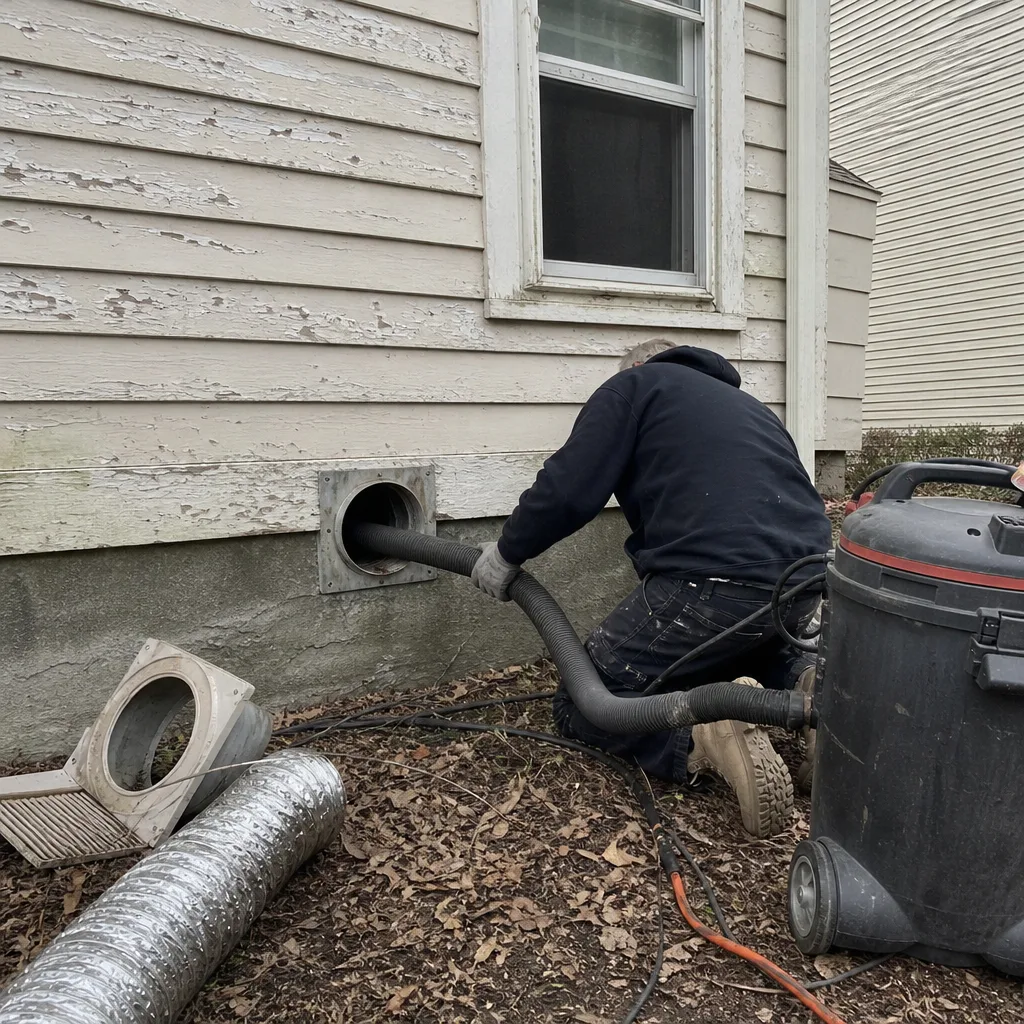 Before
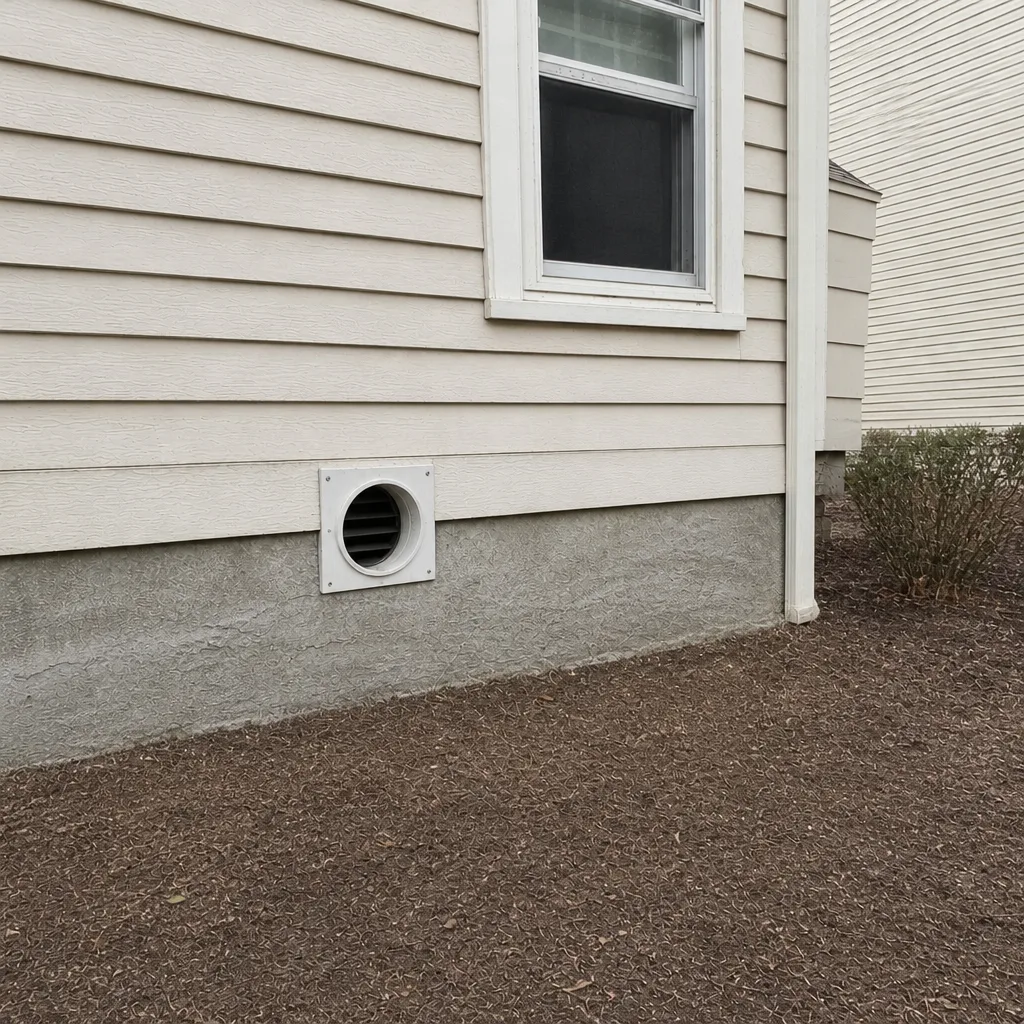 After
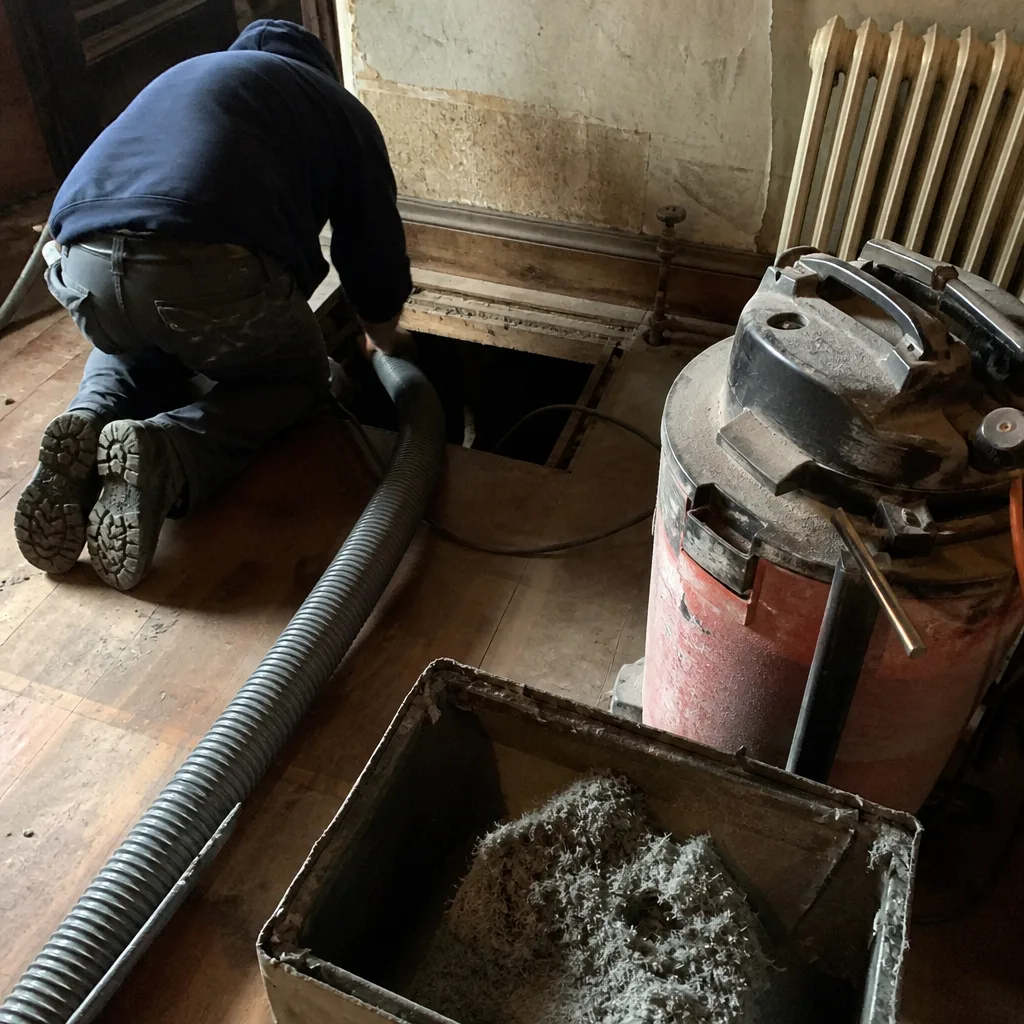 Before
 After
 Before
 After
When to Call a Professional
Duct cleaning is not a routine task you should tackle yourself with a rented shop-vac, and it’s not a job for every house every year. The right call is situational. It’s worth bringing in a professional when you’ve just finished a renovation and drywall dust is circulating; when a household member has developed new allergy symptoms that seem tied to the HVAC system; when you’ve moved into an older Providence home and don’t know the last time the ducts were cleaned; when the system is running but rooms aren’t getting air evenly; or when you can’t remember the last time the dryer vent was cleared. Duct Cleaning Providence offers free estimates in Providence. Call (844) 542-8739. We answer 24/7. Fast dispatch from 7am to 7pm, Sunday through Friday.
Frequently Asked Questions
Duct cleaning in Providence is priced per system, set by a written estimate after the walkthrough, not quoted over the phone. The estimate reflects the number of supply and return runs, the equipment required, and any repair scope identified during inspection. Whole-system pricing avoids the per-vent trap that inflates invoices for work you didn’t need. Call (844) 542-8739 for an exact quote. Estimates are free, and the written estimate sets the final price.
Cheaper quotes are almost always the result of lower-grade equipment, shorter visits, or a teaser price that grows once the technician is on site. A contractor with a shop-vac, a hose, and forty minutes of labor is charging for a much shorter process than a contractor running a negative-pressure machine and contact-cleaning system through the full system. The prices reflect different scopes, not different profit margins. Ask what equipment is used before comparing numbers.
Ask for before-and-after photos of your own ducts, and ask for them before the appointment. Photos showing stock interiors or generic basement shots prove nothing. A contractor confident in their work will document the specific system in the house they cleaned, which is why we include photos of the customer’s own ducts in the process. Call (844) 542-8739 to talk through what documentation is included with an estimate.
There’s no universal schedule. Most homes don’t need annual cleaning, but a home that has just been renovated, a home with a smoker, a home with pets that shed heavily, and a home where a household member has significant allergies all benefit from more frequent attention. The honest answer is that the right frequency depends on what’s happening in the house and what the walkthrough finds. Call for an estimate and a technician can walk the system with you.
Some can, and many can’t. Duct repair requires different skills, different equipment, and a different line item on the estimate. Ask directly during the walkthrough whether repair is in scope and what kinds of problems they typically find. A contractor who only cleans will clean around the damage and leave it. A full-service contractor will identify the issue and quote the repair alongside the cleaning.
It’s a safety service, not an upsell. Dryer vents are a documented fire risk when lint accumulates, and most duct-cleaning contractors don’t offer the service at all. The inspection is quick and the cleaning is straightforward. If the contractor you’re considering doesn’t offer dryer vent cleaning, ask why, and consider having the vent inspected separately. Call (844) 542-8739 to schedule both together.
The Bottom Line
Vetting a duct cleaning contractor in Providence comes down to four things you can verify without a license database: the equipment they run, the walkthrough they perform, the line-item structure of their quote, and the documentation they provide after the work. Get specific answers on the negative-pressure machine, the contact-cleaning system, and the HEPA containment stage, and don’t accept “yeah, we use professional equipment” as a substitute for a brand name. Insist on an in-person estimate. Read the quote for scope, not just total. Include the dryer vent on the list. And expect the contractor to find the duct damage, not just clean around it. The Providence market rewards homeowners who ask specific technical questions, because the answers separate the operators worth hiring from the ones who count on not being asked.
If you want to walk through those questions with a company that answers them the same way on the phone as on the invoice, call Duct Cleaning Providence at (844) 542-8739. Estimates are free. We answer 24/7. Fast dispatch from 7am to 7pm, Sunday through Friday.
Written by the team at Duct Cleaning Providence.