
Last updated November 16, 2026
 Whole-home duct cleaning
 Dryer vent cleaning
 Camera inspection
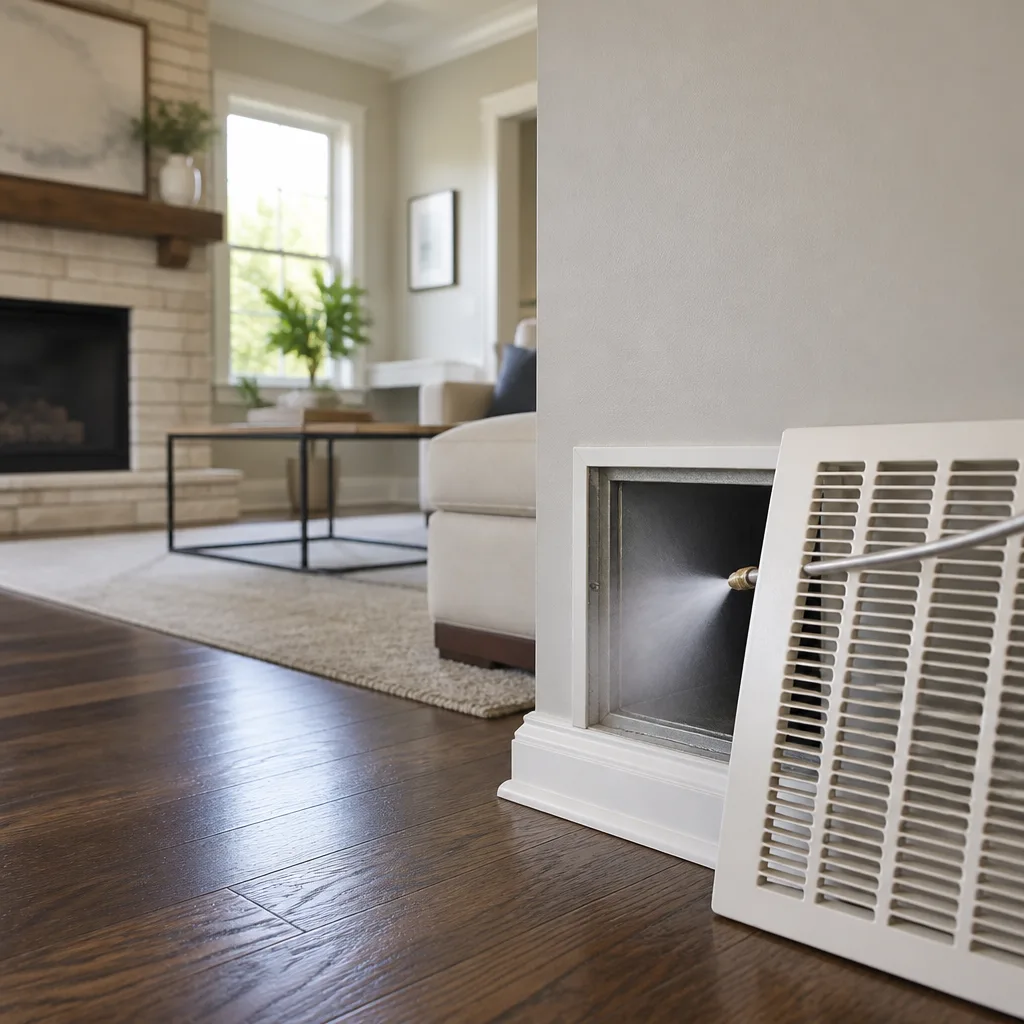 Sanitizing & deodorizing
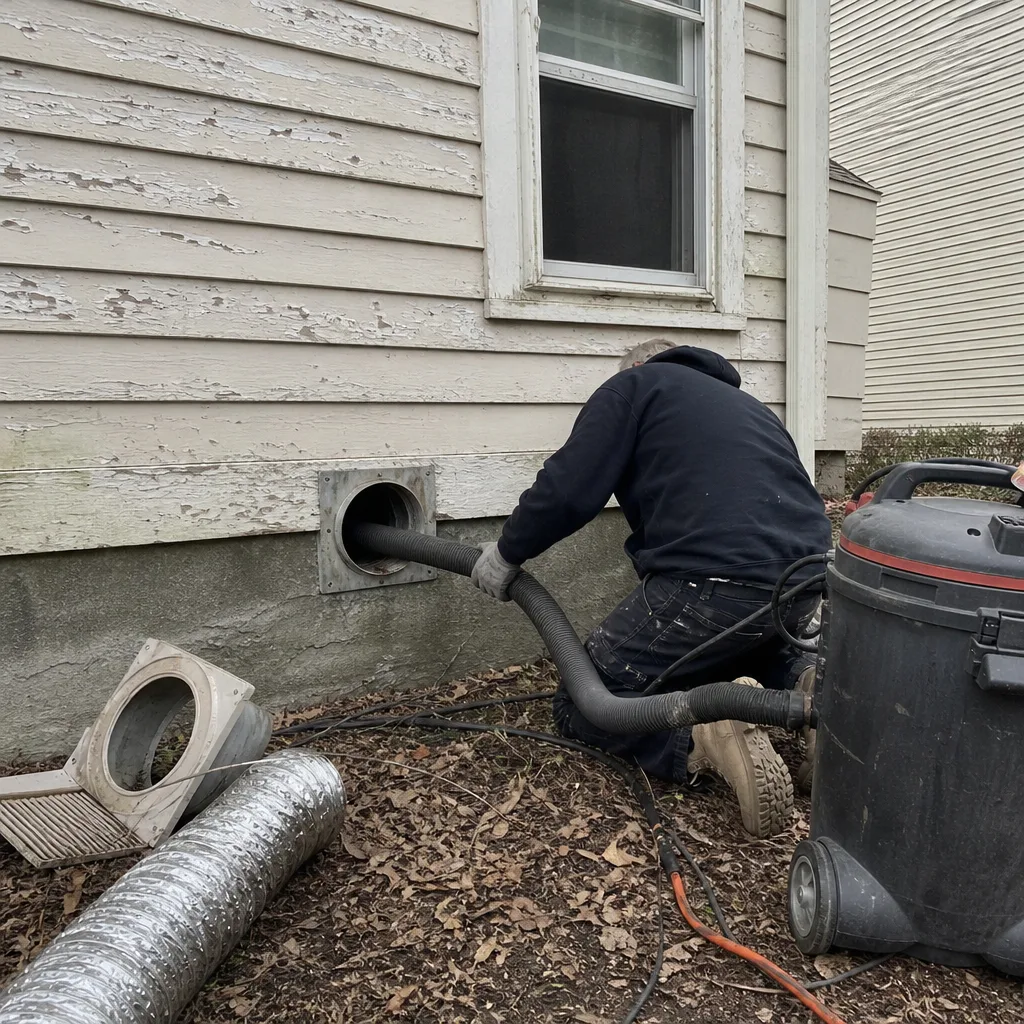
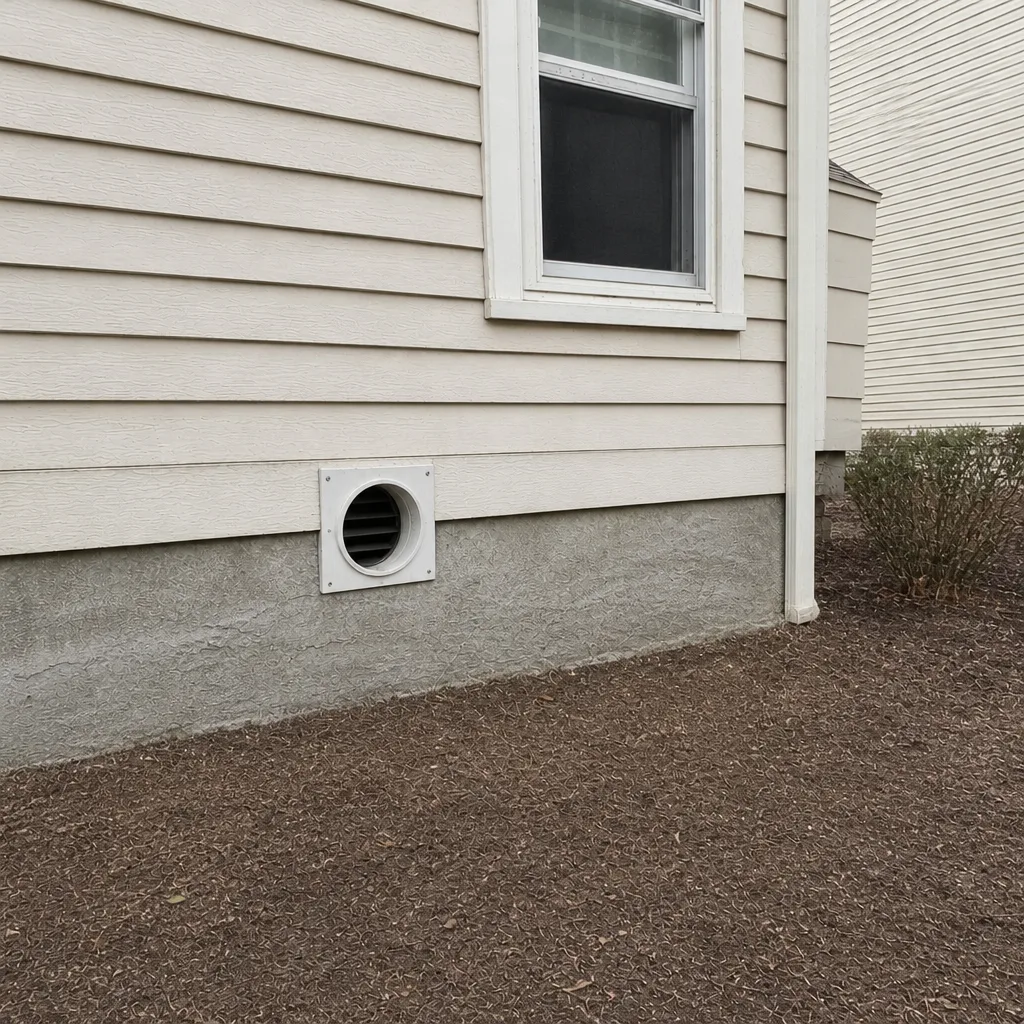
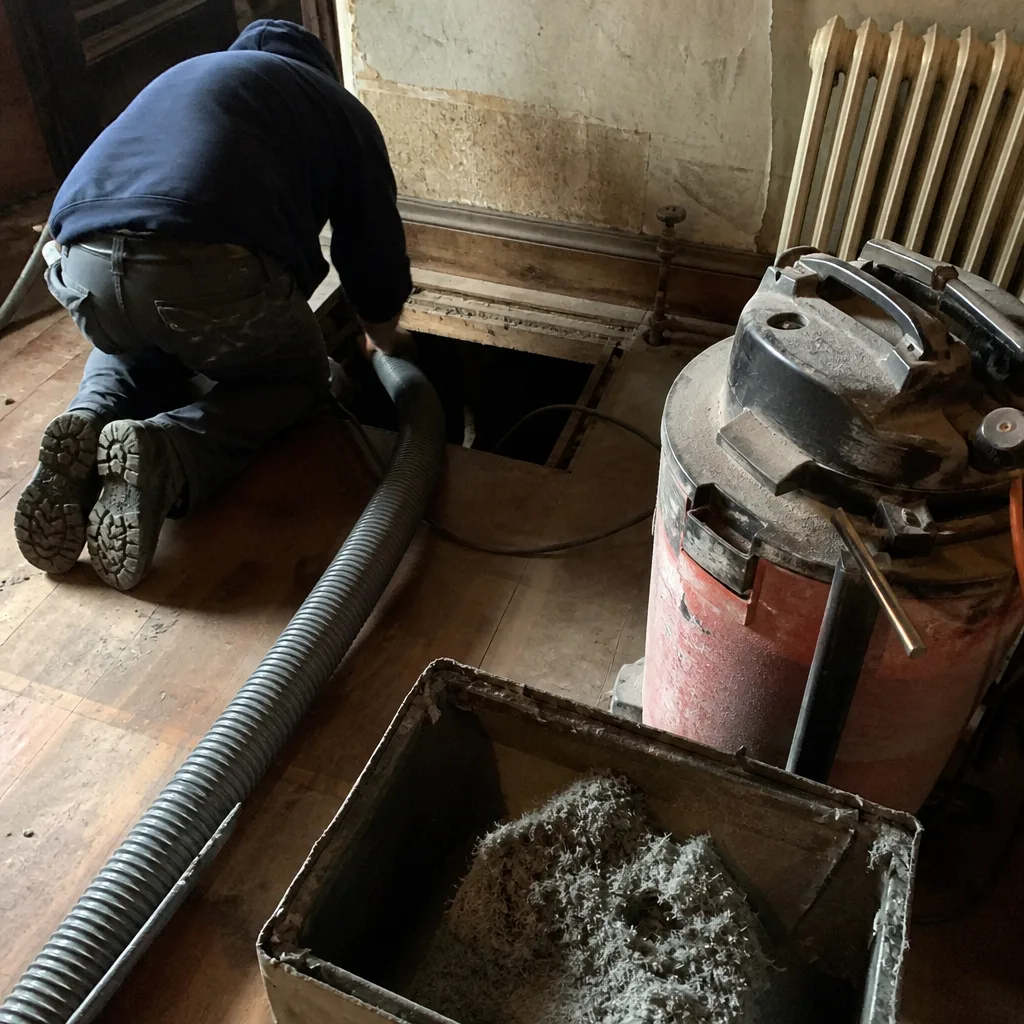
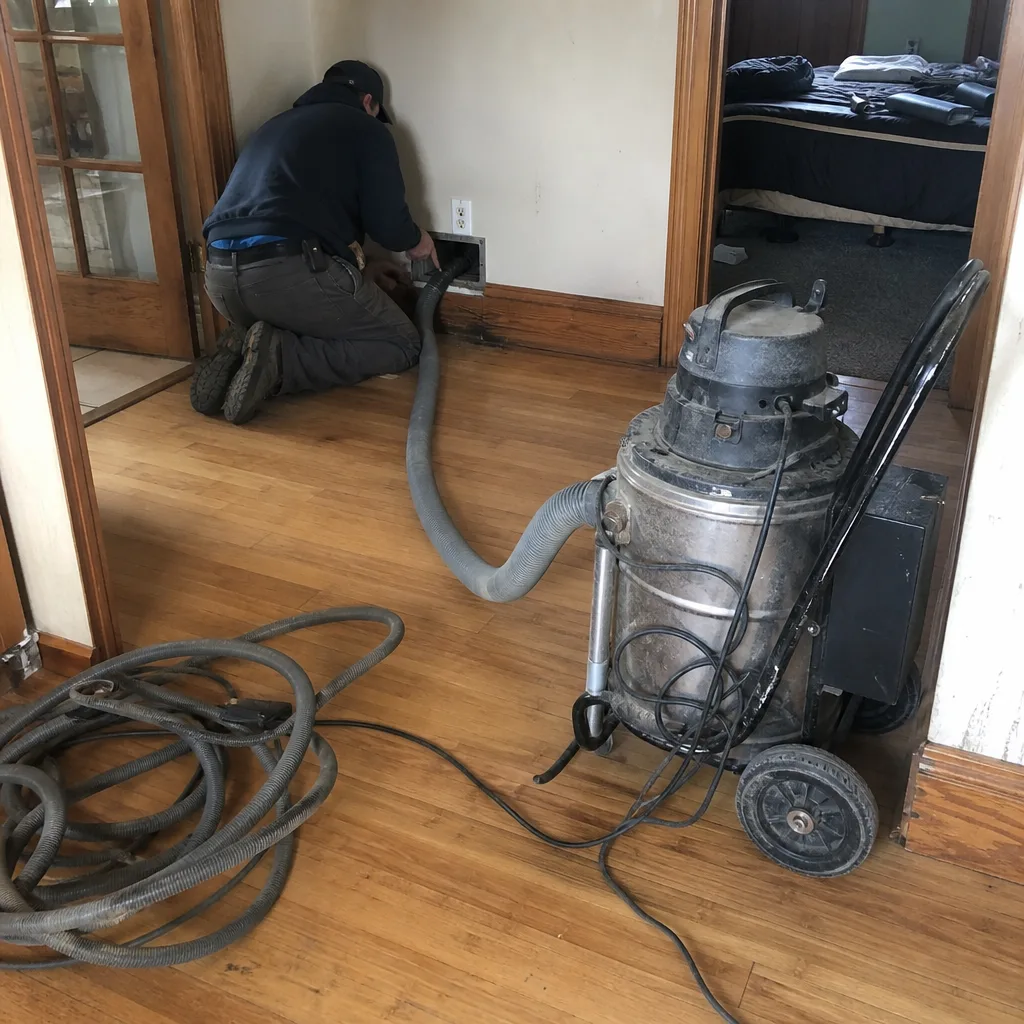
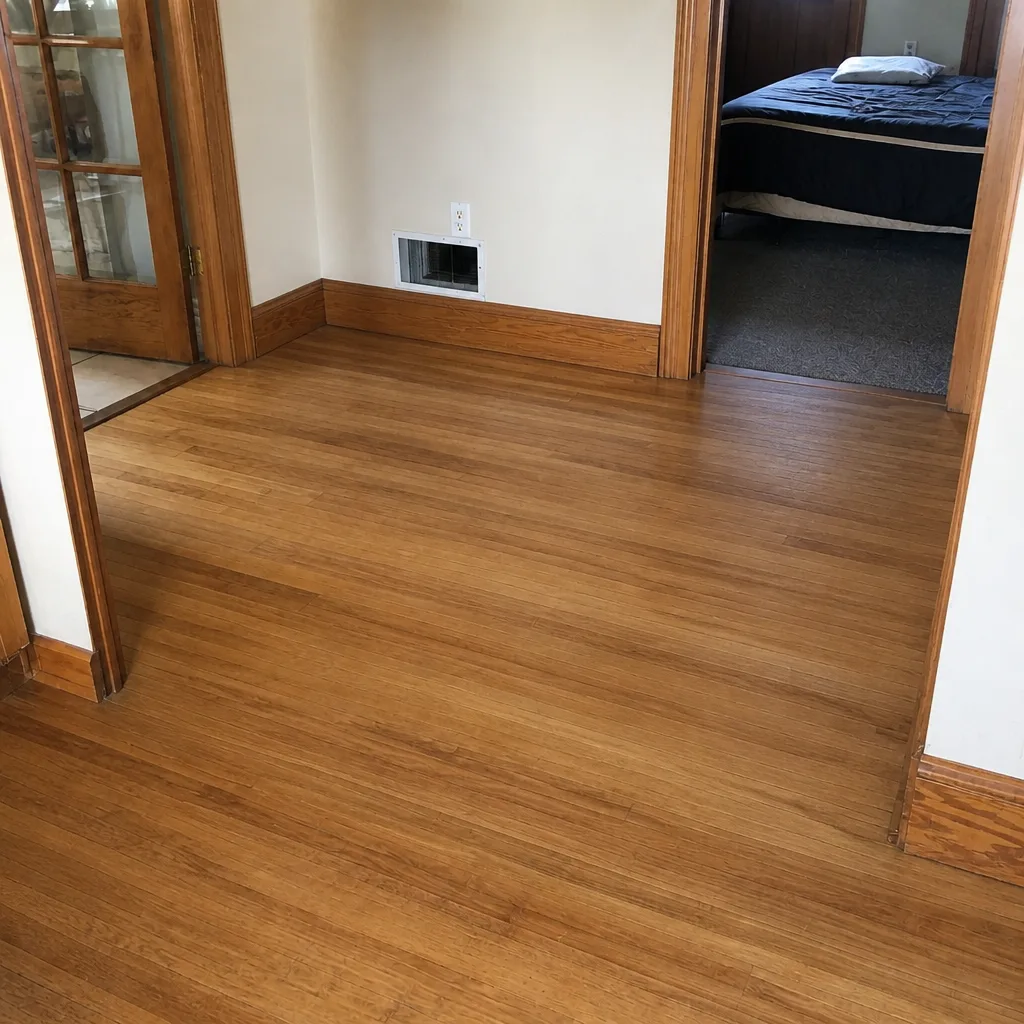
Whole-system duct and dryer vent check with before-and-after photos - you see exactly what came out of your vents
That "$99 whole-house special" is a bait ad - the real number appears once they are in your hallway, or the "clean" is a shop-vac at the register. We photograph the inside of your ducts before and after instead.
DIY vs Professional Air Duct Cleaning: The Providence Homeowner’s Decision Guide
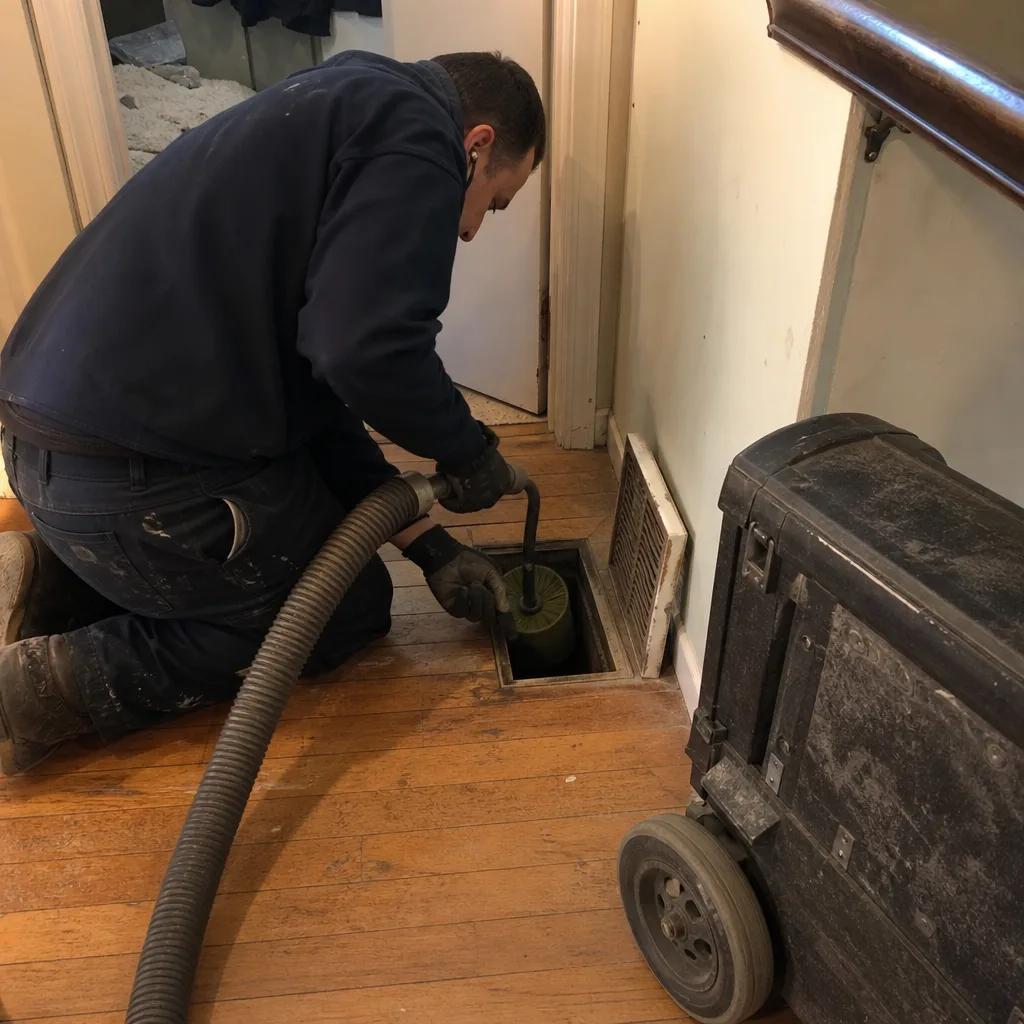
Every tutorial on DIY air duct cleaning shows the same thing: a homeowner crouched at a floor register with a shop vac, and a caption promising a lower bill. Here’s what those videos get wrong. The register is the downstream end of a duct run. Suction there pulls loosened dust toward you, not out of the system, and the system that keeps pushing air is still attached to the other end. Cleaning ducts is a physics problem before it’s a labor problem, and that changes what you can honestly do yourself. This guide covers what a homeowner can handle, where DIY stops working, and how to decide for a house in Providence.
Styles & brands we work with
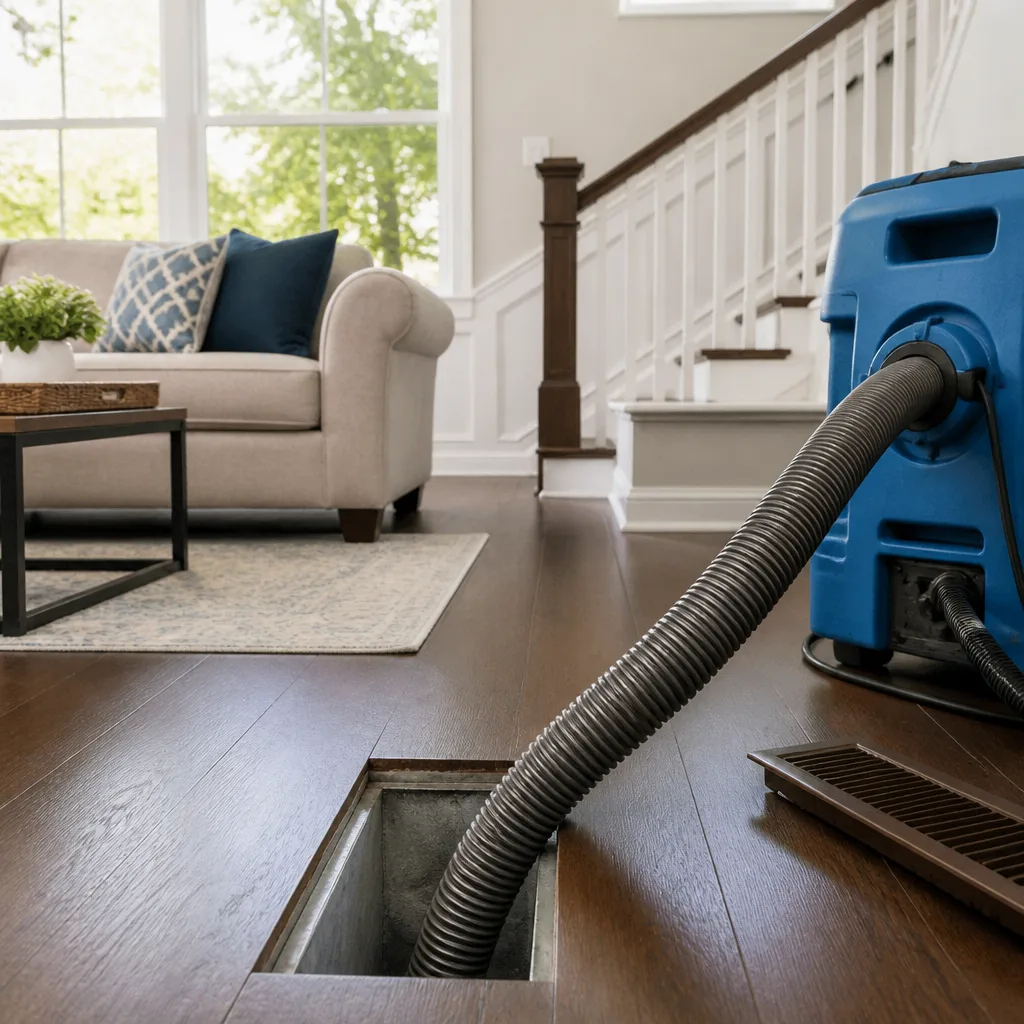
- Whole-home duct cleaning
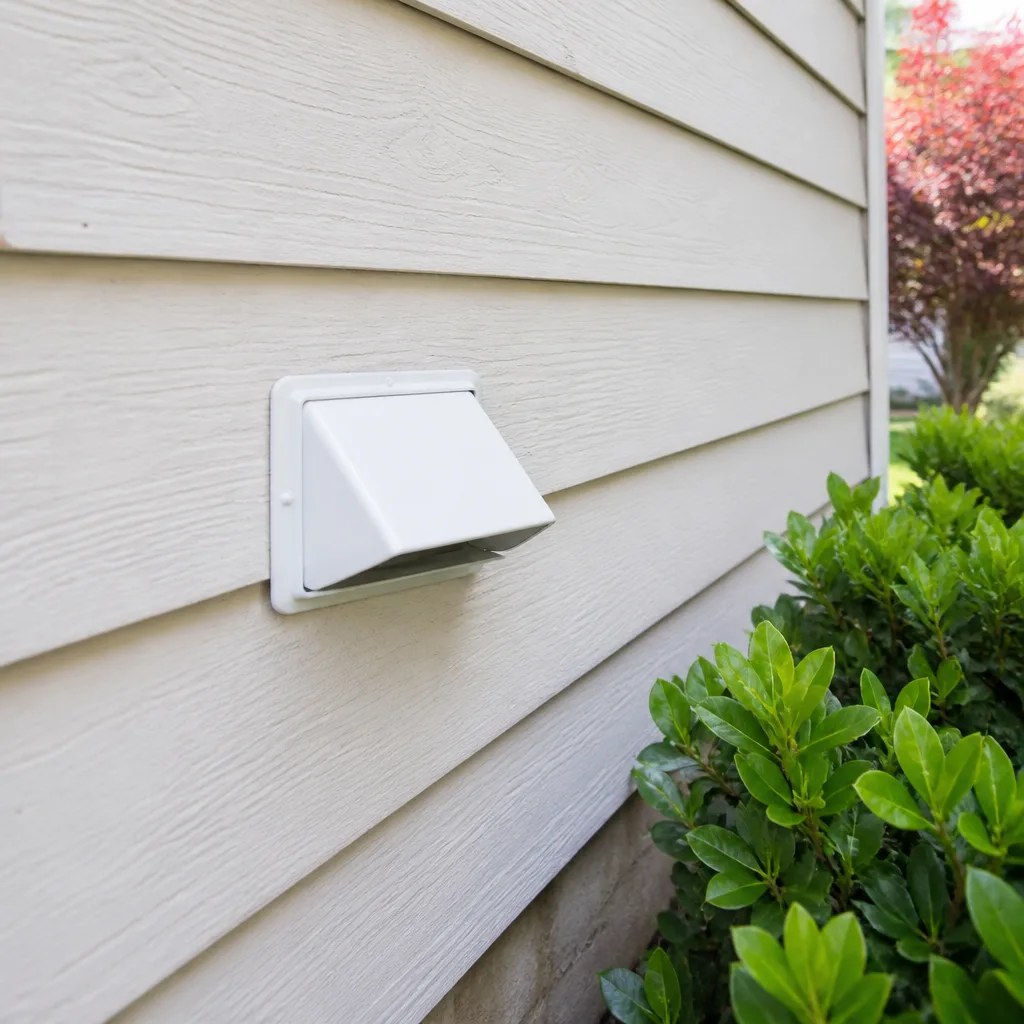
- Dryer vent cleaning
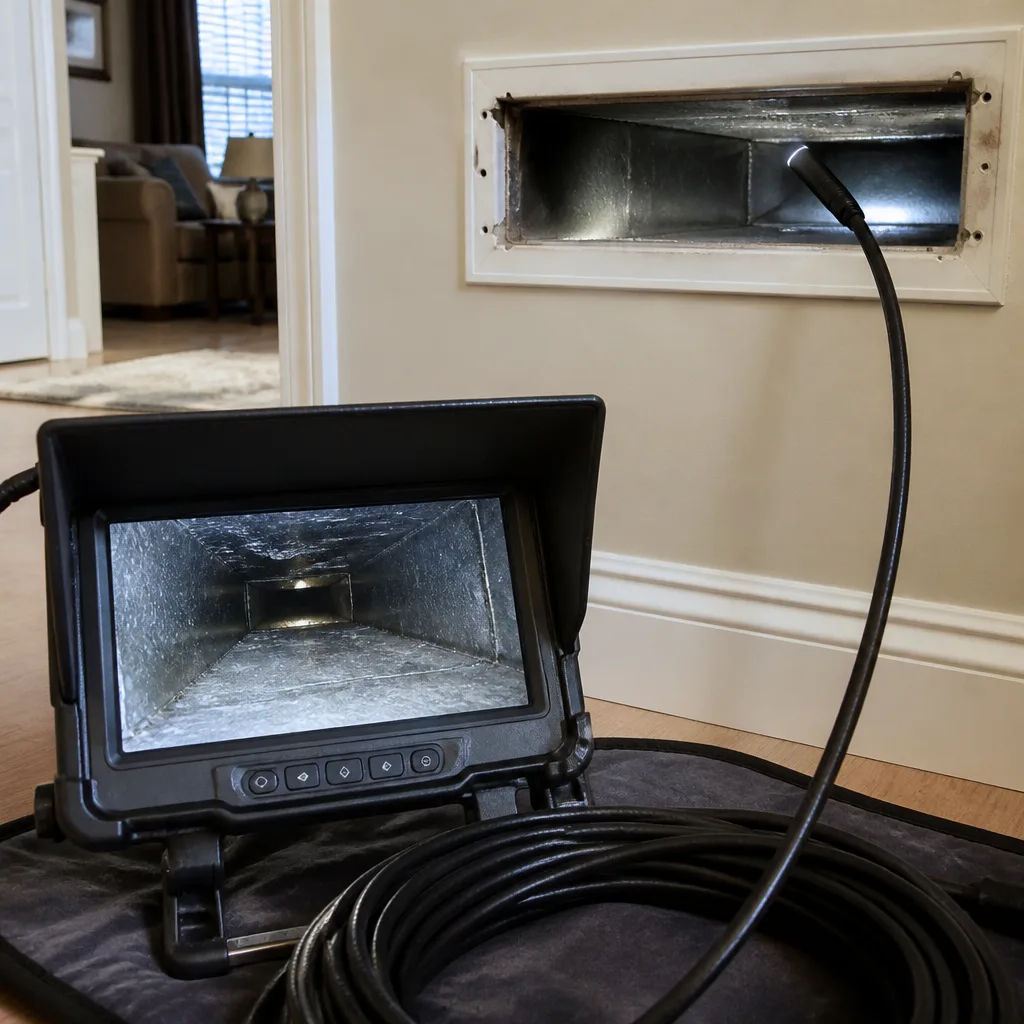
- Camera inspection
- Sanitizing & deodorizing
Quick Answer
You can clean the register covers, swap filters, and inspect accessible ducts yourself. A real cleaning of the whole system is a different job, because professional equipment uses negative pressure to hold the ducts under vacuum while the debris is agitated, so contamination travels into a containment unit instead of back into your rooms. For a home in Providence that’s had recent renovations, shows signs of mold or pests, or hasn’t had the system serviced in a decade, that containment step isn’t optional.
Table of Contents
- The Physics of Negative Pressure: Why Airflow Direction Decides Everything
- What You Can Legitimately Do Yourself
- What Professional Equipment Actually Does
- When DIY Stops Working: The Four Scenarios That Need a Pro
- DIY vs Professional: An Honest Cost-Benefit Model
- Why Providence’s Older Housing Stock Tips the Balance
- Filtration Upgrades: The Step After Cleaning
- Common Mistakes to Avoid
- Frequently Asked Questions
The Physics of Negative Pressure: Why Airflow Direction Decides Everything
Dust in a duct is stuck to the walls, sitting in low spots, or drifting in the airstream. The moment you disturb it, it goes somewhere. The only question is where. That’s the whole argument, and it’s why the technique matters more than the tool.
In a properly set up professional cleaning, the duct system is placed under negative pressure. A high-volume vacuum unit connects to the system, typically through a main trunk or the air handler opening, and pulls air toward that unit. While a technician works a mechanical brush or air whip through individual runs, every loosened particle moves with the airflow toward containment, not into the living space. Abatement Technologies HEPA filtration equipment is the kind of hardware used to hold that containment, capturing fine particles at the exhaust rather than venting them into a basement or hallway.
Now run the DIY version. The homeowner seals a register opening and vacuums from above. There’s no fan pulling the whole system negative, and the home’s own air handler is usually off. When a brush or a vacuum nozzle stirs up debris in that one run, pressure in the system is roughly the same as the room. Some debris pulled toward the vacuum, some stays, and a meaningful share is pushed back out through open registers or filter gaps. The supply side of the return grille is still connected to every other room in the house. That’s redistribution, not cleaning.
We’ve seen the result often enough to recognize it: a homeowner who spent a day working through the house and finds dust settling again within a week.
- Airflow direction: professional cleaning sources suction at the system, DIY sources suction at the point of disturbance. These are opposite directions.
- Seal integrity: a true negative-pressure setup seals the openings it isn’t working through, so debris has one path out.
- Containment level: HEPA-level filtration at the exhaust keeps fine particles out of the home. A shop vac’s filter does not.
- Coverage: a brush on a flexible shaft reaches the full run. A shop vac hose reaches where the nozzle fits.
None of this is a knock on homeowners. It’s the same physical constraint every trade faces. You can’t sand a floor well without dust extraction, and you can’t clean a duct system well without holding it under vacuum while you work.
What You Can Legitimately Do Yourself
There’s real work a homeowner can do, and it isn’t a token list. These tasks genuinely improve air quality and reduce what a professional cleaning has to remove. As a Providence air duct cleaning provider, we’d rather you do these yourself and know the difference between them and the full job.
- Clean the register covers and the first few inches behind them. Pop them off, wash them in a sink, and wipe the reachable duct mouth with a damp cloth. This is maintenance, not cleaning. You’re handling surface debris the airstream deposits at the point of highest turbulence.
- Replace filters on schedule. A clogged filter starves the system, raises running temperatures, and lets dust bypass around a saturated filter media. Write the replacement date on the edge of the new filter. It’s the single highest-value ten minutes in home air quality.
- Inspect with your phone camera. On a return grille or an accessible duct joint, slide a phone with the flash on into the opening and take a photo or short video. You’ll see what’s actually there: loose dust, debris, dark staining, pest evidence, or visible mold. This is diagnostic work and it’s genuinely useful. It’s also the honest way to find out whether you need a call.
- Maintain the dryer vent lint trap. Clear the lint screen after every load. That’s the cheap, high-value habit. Removing the lint screen is fine; digging into the vent line behind the appliance is where DYI stops, which we’ll come back to.
- Keep returns clear. Furniture, rugs, and storage pressed against return grilles restrict airflow and raise dust levels throughout the house. Straightforward and free.
What you shouldn’t do: spray anything into the ducts, run a rented leaf blower through the system, or push a shop vac hose deep into an open return. Each of those agitates large volumes of debris without containment, and you’ll be breathing the result for days.
What Professional Equipment Actually Does
Professional duct cleaning isn’t a bigger version of the same job. It’s a different setup. The tool stack matters because the two jobs are organized around opposite assumptions: one assumes your vacuum is the containment point, the other builds containment into the system before work starts.
Rotobrush contact-cleaning systems run a rotating brush head through the duct run on a flexible shaft, scrubbing the walls where dust bonds, while a simultaneous vacuum pulls material back toward the machine. Nikro negative-pressure machines generate high-volume suction at the containment end, so the run is held under vacuum while the brush works. Abatement Technologies HEPA filtration provides the containment hardware that captures fine particles exiting the system. Guardsman protective products are used to safeguard interior surfaces and system components while the work happens, which matters in a finished living space.
What this buys you, in plain terms:
- The dust goes one place. Both ends of the system are controlled at once, so loosened debris has a defined path out.
- The full duct surface gets contact. A rotating brush physically scrubs walls. A shop vac nozzle touches a fraction of the surface area.
- Fine particles get filtered, not vented. HEPA containment at the exhaust is what keeps a cleaning from becoming an indoor dust event.
- Damaged ductwork gets found and fixed. Contact cleaning exposes disconnected joints, crushed runs, torn flex duct, and gaps that leak conditioned air into wall cavities. Repair capacity is part of the visit.
One more thing that separates a real cleaning from a quick one: the technician can explain what was found. If the answer to “what did you remove and why” is a shrug, that’s information.
When DIY Stops Working: The Four Scenarios That Need a Pro
There are specific conditions where DIY isn’t merely less thorough. It’s the wrong tool. We’ve drawn the line in the same place for years.
1. Post-renovation debris. Drywall dust, sawdust, and construction grit settle into ductwork during any renovation, and the smaller particles travel through the warm air system for months. They also coat the air handler. Drywall dust is abrasive, and a shop vac at a register distributes the fine fraction through the house instead of removing it. This needs HEPA containment, not a shop vac.
2. Mold suspicion. If you’ve found visible dark staining near a return, smell a musty odor, or noticed condensation on duct surfaces, stop before you disturb anything. Mold spores aerosolize when agitation starts, and a cleaning without containment can spread them through the home. This is a case where a trained professional should look first.
3. Vermin evidence. Droppings, nesting material, or a strong ammonia odor near ducts means rodents or squirrels have been inside the system. Disturbing that material by hand is a genuine health risk, not a mess. Professional cleaning with containment, plus repairs to any chewed or disconnected sections, is the correct response.
4. A system unattended for over a decade. Ten years of accumulated dust is bonded to the duct walls, not loose. A consumer vacuum picks up the loose fraction and leaves the rest. Debris volume that large also has to go somewhere during agitation, and without negative pressure, “somewhere” is the living space.
And the fifth, from safety rather than air quality: dryer vents. A clogged dryer vent is a documented fire risk, and the hardened lint pack at the wall end of a long run doesn’t yield to a shop vac. See our guide to dryer vent cleaning for that job in detail.
DIY vs Professional: An Honest Cost-Benefit Model
Most cost comparisons treat this as a simple spending decision. It isn’t, because the two options don’t produce the same result. Here’s the honest accounting, in numbers we can stand behind.
What DIY actually costs: a shop vac you may already own, filter bags, a brush kit, and a day of your time. What it delivers is register and surface cleaning, not a full system clean. The savings are real. So is the residual debris.
What professional work costs: a per-system flat price, quoted in writing before work starts. We don’t quote per-vent prices, and we don’t hand out teaser coupons for a job that turns into a larger invoice in the driveway. The written estimate is the price.
The trade you’re making when you choose professional service:
- You buy the outcome, not the hours. The job is done when the ducts are clean, with before-and-after photos of your own system as the proof.
- You get one flat price per system agreed before work starts. That covers the scope, not a per-register count that grows on the day.
- You get diagnostic value. A professional visit includes finding disconnected joints, crushed runs, and leaking connections. Duct repairs are part of the scope, not a second appointment.
- There’s no equipment to store or dispose of, and no day spent crouched on a floor.
And the risk side of the DIY ledger, stated plainly: redistributed dust means you’ve spent a day making the problem worse. Bait-and-switch concerns run the other way, and they’re equally real. If a quote is dramatically lower than what you’d expect for a full system clean, ask what’s included and whether containment is part of the setup. The answer tells you the difference between a cleaning and a visit.
Why Providence’s Older Housing Stock Tips the Balance
In a house built last year, a careful homeowner can often keep the system in shape with filters, register cleaning, and a periodic inspection. In much of Providence, that same homeowner needs to think twice. The building stock and the mechanics of these older houses change the calculation.
Asbestos risk. Ductwork in older homes is sometimes wrapped in insulation containing asbestos, and the wrap can look like ordinary gray fabric or board. Agitating it with a shop vac’s brush attachment disturbs a material that should never be disturbed by hand. A damaged wrap means you stop, and no home inspection with a phone camera is a substitute for identification by a trained professional.
Oil soot. Older Providence homes often had oil-fired heat. Residual soot in ductwork behaves differently than ordinary dust: it’s fine, sooty, and easily airborne, and it settles into wall cavities as well as ducts. Soot disturbed without containment circulates through the home and leaves a mark on every surface.
Inaccessible duct runs. Plaster walls don’t open up cleanly, and the ducts behind them were often installed in ways that leave long runs with no accessible joint. A shop vac hose can’t get to what it can’t reach. A professional setup can often work from the system’s main trunk connections rather than needing an opening in every room.
Providence houses also tend to have original warm-air systems with later add-ons, so duct sections may not match. A technician can check connection integrity on a leaky branch. A homeowner working through registers can’t see what’s happening ten feet down the run. Plaster dust from a renovation in a Federal Hill triple-decker and one in a newer subdivision behave the same way in the ducts. The difference is how hard it is to get those ducts properly sealed and cleaned.
It’s also worth knowing what a thorough job looks like before you hire anyone. Many homeowners in Providence start with the basics in Duct Cleaning Providence and go from there.
Filtration Upgrades: The Step After Cleaning
A cleaning is a reset, not a permanent fix. What keeps the ducts clean is the filtration setup and the habits around it. That’s the part of the process most homeowners skip, and it’s where the value of a cleaning visit extends beyond the day it happens.
Filter media in a home system determines how much of the dust load ever reaches the ducts, so the right filter matters. We work with Honeywell and Aprilaire filtration products and can recommend a setup that fits your return configuration and your household’s needs. For homes with allergy sufferers, that’s the meaningful step. A HEPA-rated media filter cabinet, or a whole-home filter that actually seals, changes the dust load the system sees every day. It also takes stress off the blower.
A practical sequence after cleaning:
- Replace the filter. A fresh filter after a cleaning keeps the cleaning from being undone by a saturated one.
- Check the return grille sizing. Undersized returns starve the system, raise air velocity, and pull more dust past the filter. A technician can measure this.
- Seal the leaks. Leaky returns pull unfiltered air from basements and crawlspaces. Air duct repair closes those gaps, which is why cleaning and repair belong in one visit.
- Set a filter schedule. Mark the calendar. Consistency beats filter specs.
None of this requires a sales pitch. The best filtration upgrade is the one your system’s configuration actually supports, and a good technician will tell you honestly if that’s not much.
Common Mistakes to Avoid
- Vacuuming at the register and calling it a cleaning. The register is one end of the run, and vacuuming there while the air handler is off leaves the rest of the system untouched. Loosened debris ends up in the rooms, not the vacuum.
- Opening basement ducts during a heating season project. That’s the one place you don’t want to be careful-vacuuming. Opening a return line to inspect and then resealing it poorly lets conditioned air leak into a cold basement, which is a duct repair, not a cleaning.
- Using a leaf blower or compressed air in the ducts. Both agitate more debris than any consumer vacuum can capture, and the result is airborne contamination through the house. If you can’t contain it, don’t stir it up.
- Skipping the dryer vent because the ducts “look fine”. The vent line is separate from the heating and cooling ducts, and a clogged line is a documented fire risk. Check the exterior flap; if it doesn’t open cleanly when the dryer runs, the line needs attention.
- Ignoring a musty smell after a cleaning. A musty odor near a return usually points to moisture inside the system, and dusting it over only hides it. Moisture has to be found and fixed, or the ducts will look the same again by next season.
- Treating a cheap coupon price as the whole price. A quote per vent can turn into a much larger invoice on the day. Ask for a flat per-system price and written scope before anyone starts.
- Disturbing old duct wrap without knowing what it is. Insulation wrap in an older Providence home may contain material that shouldn’t be agitated. If a wrap looks damaged or deteriorated, leave it and arrange for a professional evaluation.
When to Call a Professional
Call when the work involves containment, diagnosis, or a safety risk you can’t inspect yourself. That includes post-renovation debris in the ducts, visible or suspected mold, vermin evidence, ductwork in a home that hasn’t been serviced in a decade or more, and any damaged asbestos-containing wrap. It also includes a dryer vent with a clogged or long, bendy run. And it includes the honest case: you want a real cleaning and a technician who can tell you what was found. Duct Cleaning Providence offers free estimates in Providence. Call (844) 542-8739. We answer 24/7. Fast dispatch from 7am to 7pm, Sunday through Friday.
Frequently Asked Questions
You can clean register covers and the first few inches behind them, and that’s worth doing. A shop vac can’t clean the full duct system, because it doesn’t hold the system under negative pressure while you work, so loosened debris redistributes into the rooms instead of being contained. For a system with significant buildup, renovations, or contamination, that’s a professional job.
Most homes don’t need a cleaning on a fixed schedule. The honest answer depends on the system and the house: recent renovation, water intrusion, pets, smokers, or a system that’s gone years without a look are the reasons that matter. Filter changes and register cleaning handle the rest between professional visits. If you’re unsure, call (844) 542-8739 for a free estimate and an honest read on your system.
We quote a flat price per system, set in writing before work starts, rather than a per-vent figure that grows once a technician is in the house. The scope drives the price: number of systems, level of contamination, and whether repairs are needed. Call us for a free estimate, and the written quote is the price – no teaser coupons that turn into a bigger invoice on the day.
Usually because the setup is different. A cheap quote often means a shop vac or a consumer-grade unit and a quick pass at the registers, without true negative pressure or HEPA containment. You’re paying for a different job, not a discounted version of the same one. Ask what equipment is used and whether the system is held under vacuum during the cleaning.
Ask for before-and-after photos of your own ducts, not stock images. A technician should be able to walk you through what was found, what was removed, and whether any duct repairs were needed. That record is the difference between a cleaning you can verify and a visit you have to take on faith.
Yes, in specific cases. Old duct insulation wrap may contain asbestos and should never be agitated by hand. Drywall dust and oil soot are fine enough to become airborne in large volumes, and vermin contamination is a genuine health hazard. If any of those apply, arrange a professional evaluation before you touch anything.
We can often schedule same-day work. Call (844) 542-8739 and we’ll confirm what’s available. We answer 24/7. Fast dispatch from 7am to 7pm, Sunday through Friday, and we’re closed Saturday.
The Bottom Line
DIY duct cleaning isn’t a cost-cutting shortcut for the full job. It’s a name for the maintenance tasks that genuinely matter: clean registers, fresh filters, phone-camera inspections, and a clear dryer vent lint trap. Those are yours to do and worth doing. Everything beyond that runs into physics. Without negative pressure and HEPA containment, agitating duct debris moves contamination around the house rather than out of it, and in Providence’s older housing stock, with its plaster walls, oil soot, and sometimes unknown duct wrap, the stakes for getting it wrong are higher than a wasted afternoon. Call (844) 542-8739 for a free estimate. We answer 24/7. Fast dispatch from 7am to 7pm, Sunday through Friday.
If you’re still deciding, start with a look at Providence and the services available for the homes here. And when the time comes to act, call (844) 542-8739 for a free estimate – one flat price per system, in writing, before any work begins.
Written by the team at Duct Cleaning Providence.
See the difference
 Before
 After
 Before
 After
 Before
 After